
Tessellated Tiles in Greystanes
Greystanes combines an established low-density residential setting with a layered local history that includes Aboriginal and colonial heritage, former rural holdings and twentieth-century suburban growth. For a tessellated tile project here, the most useful starting point is the property itself: consider the home's form, the approach to the verandah or entry, existing paths and garden setting, then choose a new layout or repair strategy that sits comfortably with those features.
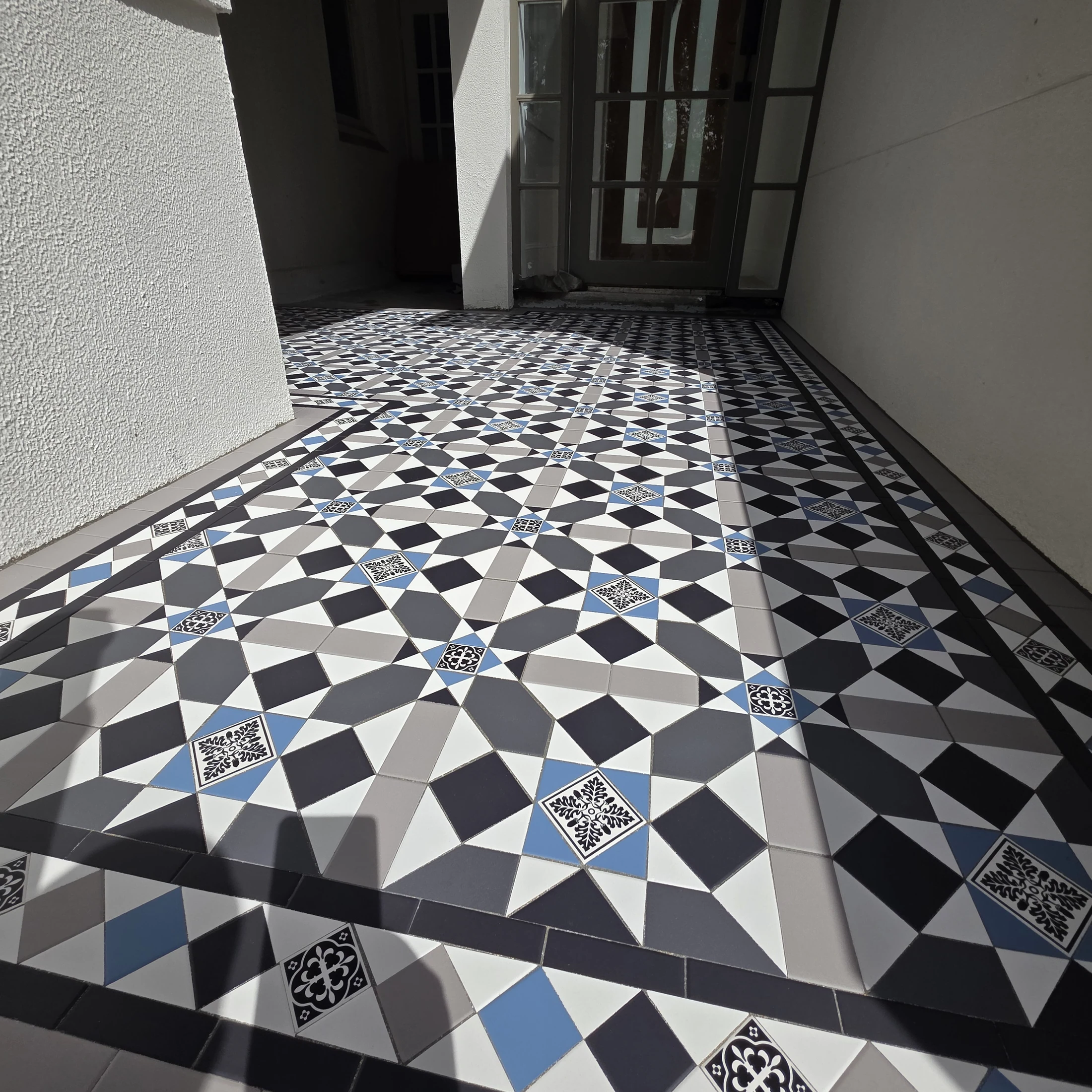
A local setting shaped by rural history and suburban growth
Cumberland Council describes Greystanes as a low-density residential area with significant Aboriginal and colonial history. The local record also points to earlier estates, grazing, orchards, vineyards and poultry farming before the suburb developed into the established residential area seen today.
That layered setting makes proportion and transition important. A front path, porch or verandah can be designed as part of the home's arrival sequence rather than as an isolated patterned surface. Layout, border width, colour balance and the relationship to fencing, planting and the street should be considered together.
Greystanes Ward Place Development Plan 2019–2020, Cumberland City CouncilGreystanes Heritage Inventory Sheets, Cumberland City Council Heritage Study 2019History of the City of Holroyd
Design choices for older homes and heritage-listed properties
Cumberland's Greystanes inventory includes a Late Victorian cottage whose significance includes its architectural form, period detailing and contribution to the streetscape. It also records a former farm, inn and post office and a remnant Cumberland Plain Woodland landscape. These are specific listed places, not a claim that every Greystanes home is heritage protected.
Where a property has an older verandah, an established garden or surviving original details, a design consultation can examine how a tessellated pattern will meet thresholds, posts, steps and existing paving. For a listed property or a home in a conservation area, check the applicable property records and planning requirements before work begins.
Greystanes Heritage Inventory Sheets, Cumberland City Council Heritage Study 2019Heritage in Cumberland
Verandahs, paths and carefully finished transitions
Greystanes' parks, reserves and residential streets form part of the setting in which a home's hard surfaces are experienced. For a verandah or pathway, the practical design questions include the path's width and direction, how the pattern turns at corners, how it meets stairs or a driveway, and how edging sits beside planting or other paving.
Tessellated tile work rewards careful setting out and consistent craftsmanship. Supply, installation and restoration can be considered as one coordinated brief, while a restoration assessment can focus on what is worth retaining and what can be sensitively renewed. The appropriate approach depends on the existing surface, its condition and the details that give the property its character.
Greystanes Ward Place Development Plan 2019–2020, Cumberland City CouncilGreystanes Heritage Inventory Sheets, Cumberland City Council Heritage Study 2019
Use the local heritage records before altering significant fabric
Cumberland Council advises property owners to check Schedule 5 of the Cumberland Local Environmental Plan 2021, the NSW Planning Portal Spatial Viewer and the State Heritage Inventory when determining whether a property has heritage significance. The council also explains that the required pathway can vary with the property status and the proposed work.
A tile consultation is not a substitute for council or planning advice. If the project affects an identified heritage item, a conservation-area property or significant original fabric, confirm the relevant requirements before ordering materials or commencing work.
Your Heritage Tiling Questions
Are all homes in Greystanes heritage listed?
No. Cumberland's heritage inventory identifies particular buildings and landscape items, including individual places in Greystanes. A suburb's historic character does not by itself mean that every home is listed. Check the property's records through Schedule 5 of the Cumberland Local Environmental Plan 2021, the NSW Planning Portal Spatial Viewer and the State Heritage Inventory.
What should I consider when planning tessellated tiles for a Greystanes verandah or path?
Begin with the property's existing form and approach. Consider the path or verandah proportions, pattern direction, border and corner turns, thresholds, steps, drainage and the relationship to fences, planting and adjacent paving. On an older or listed property, also consider how the work relates to original fabric and the setting.
Does a heritage check apply before tile work in Greystanes?
It may. Cumberland Council says that work on a heritage item or conservation-area property can involve approvals or other limitations depending on the property and the scope of work. Check the relevant planning records and confirm the pathway before work begins.
Can existing tessellated tiles be restored rather than replaced?
Often the right choice depends on the condition of the existing surface and the value of the surviving fabric. A restoration assessment can identify what should be retained, what may need repair and where new work should be differentiated or coordinated with the existing pattern. The appropriate recommendation is property-specific.
Does the Cumberland route mean Greystanes is legally within every area named on the page?
The route provides a service and navigation context for Greystanes. For statutory heritage, planning or approval questions, use the property's actual council and planning records rather than relying on a service-directory label.
Discuss Your Heritage Tiling Project
Share your location, project details and photographs using our enquiry form, or call 0433 932 711.