
Tessellated tile services in Lidcombe
Lidcombe brings together a railway-centred town centre, long industrial and institutional history, and a documented mix of Victorian, Classical, Federation, Inter-War and Art Deco buildings. For a verandah, pathway, entry or interior floor, a good tile scheme begins with the property itself: its surviving details, its setting and the relationship between original fabric and new work. AHTC can help with tessellated tile design, supply, installation and restoration planning for Lidcombe projects.
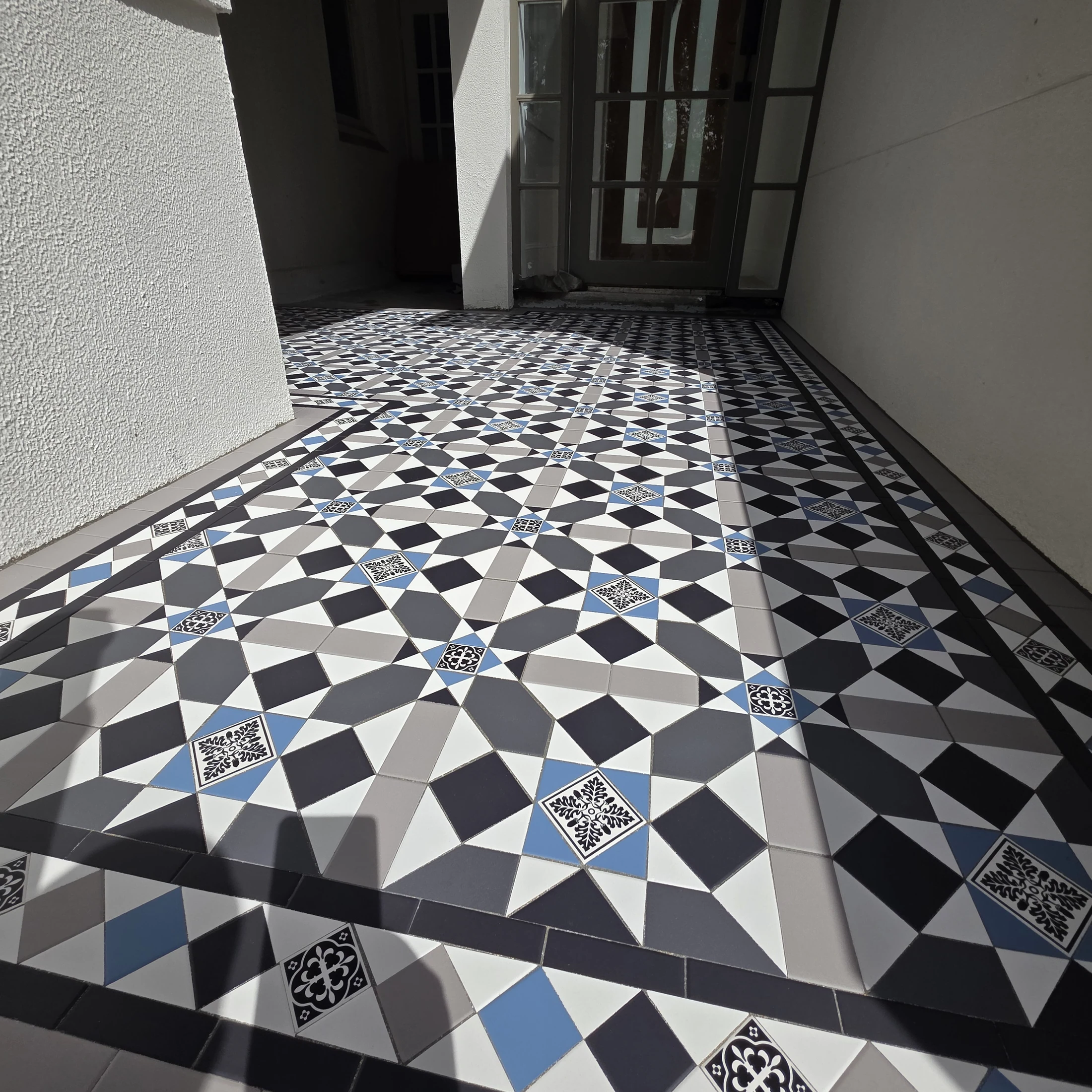
A varied local setting for considered tile work
Cumberland's Lidcombe Town Centre plan describes heritage buildings in several architectural languages, including Victorian, Classical, Federation, Inter-War Romanesque, Inter-War Georgian Revival, P&O and Art Deco. That range is a useful reminder that a tile layout should be selected for the individual property rather than applied as a single Lidcombe look.
The town centre's north-and-south relationship across the railway, together with its streets, parks and older civic, school, religious and commercial buildings, creates different setting cues from one project to the next. A consultation can consider the entry sequence, existing thresholds, border proportions, colour balance and how a new surface sits beside retained details.
Start with the property and its heritage context
Cumberland distinguishes individual heritage items, heritage conservation areas, archaeological heritage sites and Aboriginal places of heritage significance. A nearby landmark or an older-looking house is not, by itself, proof that a property has the same status.
Before altering an older verandah, path or floor, check the property's current planning and heritage information and confirm whether the proposed work needs consent. Cumberland directs owners to Schedule 5 of the Cumberland Local Environmental Plan 2021, the NSW Planning Portal Spatial Viewer and its heritage guidance. AHTC's role is to discuss the tile work and its practical design considerations, not to provide council approval.
Design inspiration for Lidcombe verandahs, paths and floors
For a new scheme, inspiration can come from the property's scale and street presence: a restrained border at a formal entry, a geometric field that sits comfortably with existing joinery, or a pathway layout that gives clear definition without competing with the building. The most useful choices are the ones that connect proportion, edge treatment and colour to the place rather than imitate a generic period label.
For restoration, begin by documenting what remains. Existing tile sizes, pattern fragments, thresholds, edging and transitions can inform a repair or a carefully separated new section. Where a matching decision is uncertain, retain the distinction between surviving fabric and new work and seek property-specific heritage advice before construction.
Lidcombe Town Centre Public Domain PlanHeritage Study 2019 - Lidcombe Heritage Inventory SheetsHeritage in Cumberland
A place shaped by movement, work and community buildings
Lidcombe's recorded history runs from Haslam's Creek and the 1859 railway station through the later Rookwood and Lidcombe names, industrial growth and the community institutions that followed. The public school, civic buildings, hotels and other listed places provide local reference points for understanding how public-facing architecture developed around the transport corridor.
That history can inform a design conversation without turning it into a claim about a private home's age or status. For each project, the practical brief remains the same: understand the existing surface, choose a suitable layout and coordinate supply, installation or restoration with the property's constraints.
History of Rookwood and Lidcombe MunicipalityLidcombe - A Brief HistoryLidcombe Town Centre Public Domain Plan
Your Heritage Tiling Questions
Are all Lidcombe homes heritage-listed?
No. Cumberland treats heritage items, heritage conservation areas, archaeological sites and Aboriginal places of heritage significance as separate categories. Check the individual property through Schedule 5 of the Cumberland Local Environmental Plan 2021 and the NSW Planning Portal Spatial Viewer before assuming a heritage control applies.
How can I plan tessellated tiles for an older Lidcombe property?
Begin with the building and its surviving details. Review the entry, verandah or floor, note existing patterns and edges, and consider how a new layout will sit with the property's scale and retained fabric. If the property has heritage significance, confirm the relevant planning pathway before work starts.
Can existing tessellated tiles be restored rather than replaced?
That depends on the condition, extent and significance of the surviving surface. A site-led assessment can separate repairable original fabric from areas that need new work, then consider matching, transitions and edging. Any planning or heritage consent question should be checked with the relevant authority for the property.
Does a heritage listing automatically approve a tile design?
No. Cumberland states that approval requirements depend on the proposed work and the property's heritage status. Some minor or exempt work may follow one pathway, while other alterations may require consent or a development application. Obtain property-specific guidance before construction.
Discuss Your Heritage Tiling Project
Share your location, project details and photographs using our enquiry form, or call 0433 932 711.