
Parramatta, NSW
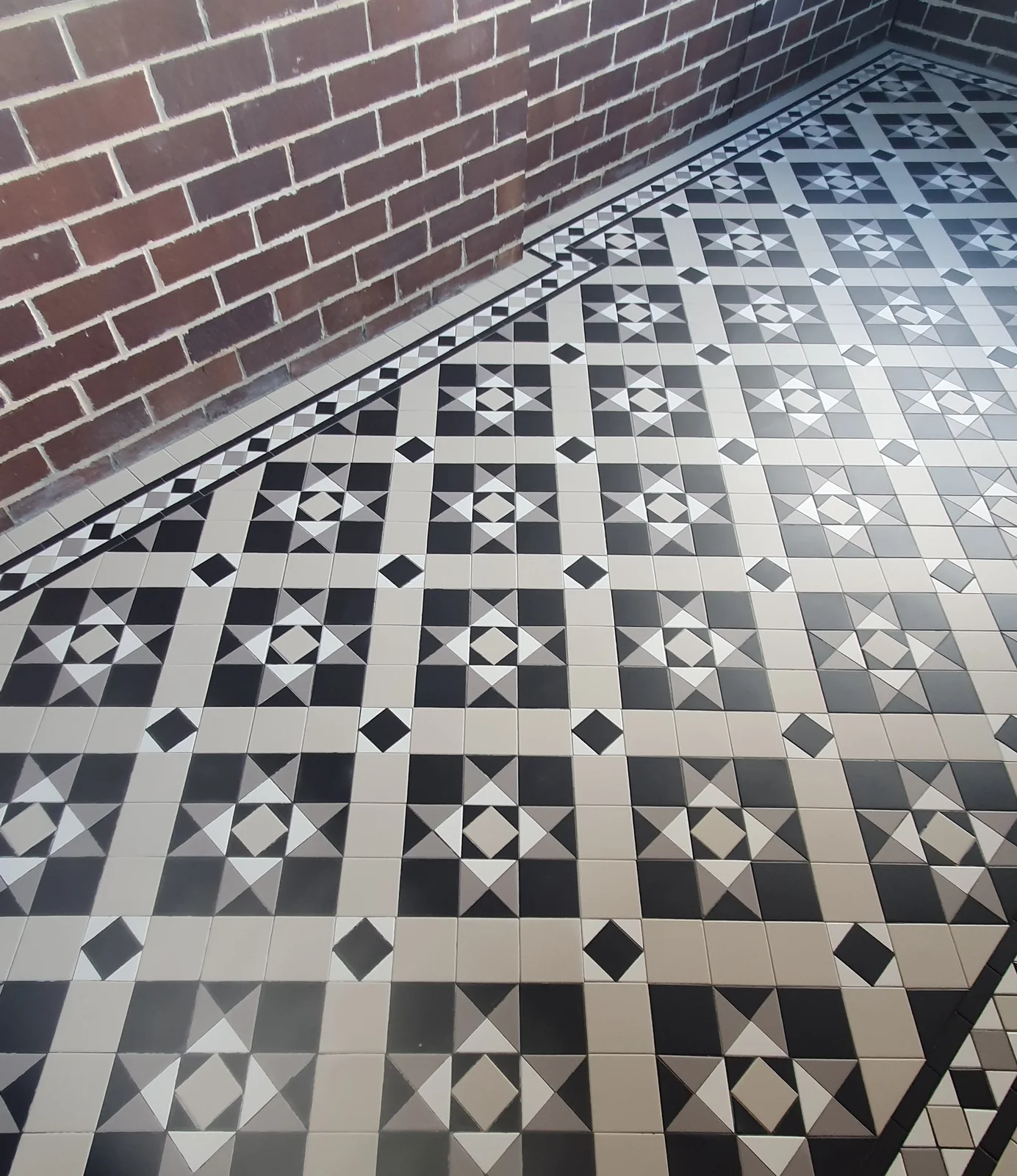
Parramatta NSW tessellated tiling
Supply and installation tessellated tiles for the pathways and entrance in Parramatta, NSW.
Read the projectParramatta combines a long-established cultural landscape with a changing metropolitan setting. For a verandah, entrance, pathway or other tiled surface, the right approach begins with the property itself: understand what remains, identify the desired new work, and choose a pattern, border and finish that sit comfortably with the building. Authentic Heritage Tiling Co can help with design consultation, tessellated tile supply, installation, restoration and stone bullnose or edging coordination.
The City of Parramatta's heritage information covers heritage items and Heritage Conservation Areas at several levels of protection. That does not mean every Parramatta property is listed or that every tiled surface has the same controls. Before changing an exterior floor, check the property's planning information and whether it is an item, within a conservation area or near a place whose setting may be affected.
Council identifies the Parramatta Local Environmental Plan 2023 and Development Control Plan 2023 as the key local planning documents. They address matters including alterations, maintenance, materials, finishes, fencing and Heritage Conservation Areas. A tile layout should therefore be considered as part of the building's visible form and setting, not as an isolated colour choice.
Heritage Conservation - City of ParramattaLocal Heritage Planning Controls | City of ParramattaParramatta LEP 2011 - South Parramatta Heritage Conservation Area and North of Boundary Street | NSW Planning Portal
For a period-facing entrance or verandah, begin by reading the proportions of the threshold, steps and surrounding joinery. A restrained geometric field with a considered border can reinforce an existing façade without competing with it. Where a new pathway meets older masonry, allow the transition, levels, drainage and edge treatment to be resolved together so the tile work feels integrated rather than applied afterwards.
When original tiles survive, matching the visual rhythm and retaining sound fabric may be more appropriate than replacing everything. Where the work is new, council guidance favours a sympathetic relationship with the building's form, scale, materials and finishes rather than an imitation that falsely suggests age. Pattern selection, colour contrast, edging and step risers should be reviewed against the actual house and its exposure.
A useful consultation considers whether the brief is supply only, a coordinated supply-and-installation project, restoration of surviving tessellated work or a new heritage-sensitive surface. It should also examine the existing substrate, access, junctions with steps and walls, edge protection, surface exposure and the relationship between new and retained materials. These decisions help determine whether the design should reproduce an established rhythm, introduce a complementary pattern or keep the intervention deliberately quiet.
The local project gallery includes an approved Parramatta example of supply and installation at a Federation property. It is presented as a project reference rather than a claim that all Parramatta homes share the same style or require the same specification.
Council states that work to heritage items and properties in Heritage Conservation Areas may require a development application, while some minor work follows a separate heritage minor-works process. Properties near heritage items may also need to address effects on architectural style, scale, setbacks, external materials, finishes and colours. Confirm the applicable pathway with the City of Parramatta before committing to external changes; tiling advice is not a substitute for council approval or heritage advice.
Heritage Development Approvals | City of ParramattaLocal Heritage Planning Controls | City of Parramatta
No. The City of Parramatta distinguishes heritage items and Heritage Conservation Areas from the wider local government area. Check the specific property and its planning controls rather than assuming that a suburb-wide listing applies.
It depends on the property, the work and the applicable controls. Council says work to heritage items and properties in Heritage Conservation Areas may require a development application, while some minor work may use a heritage minor-works process. Confirm the pathway with council before work starts.
Begin with the building's form, scale, materials and finishes. A new tile design can be sympathetic without pretending to be original; consider pattern scale, border proportions, colour, steps, edges and the relationship between retained and new work.
Often the first question is whether sound original fabric can be retained and what condition it is in. A site-led assessment can separate repairable areas from new work and guide matching, transitions and the extent of any replacement. The appropriate planning pathway should still be checked for the property.
Share your location, project details and photographs using our enquiry form, or call 0433 932 711.