
Tessellated Tiles in Wentworthville
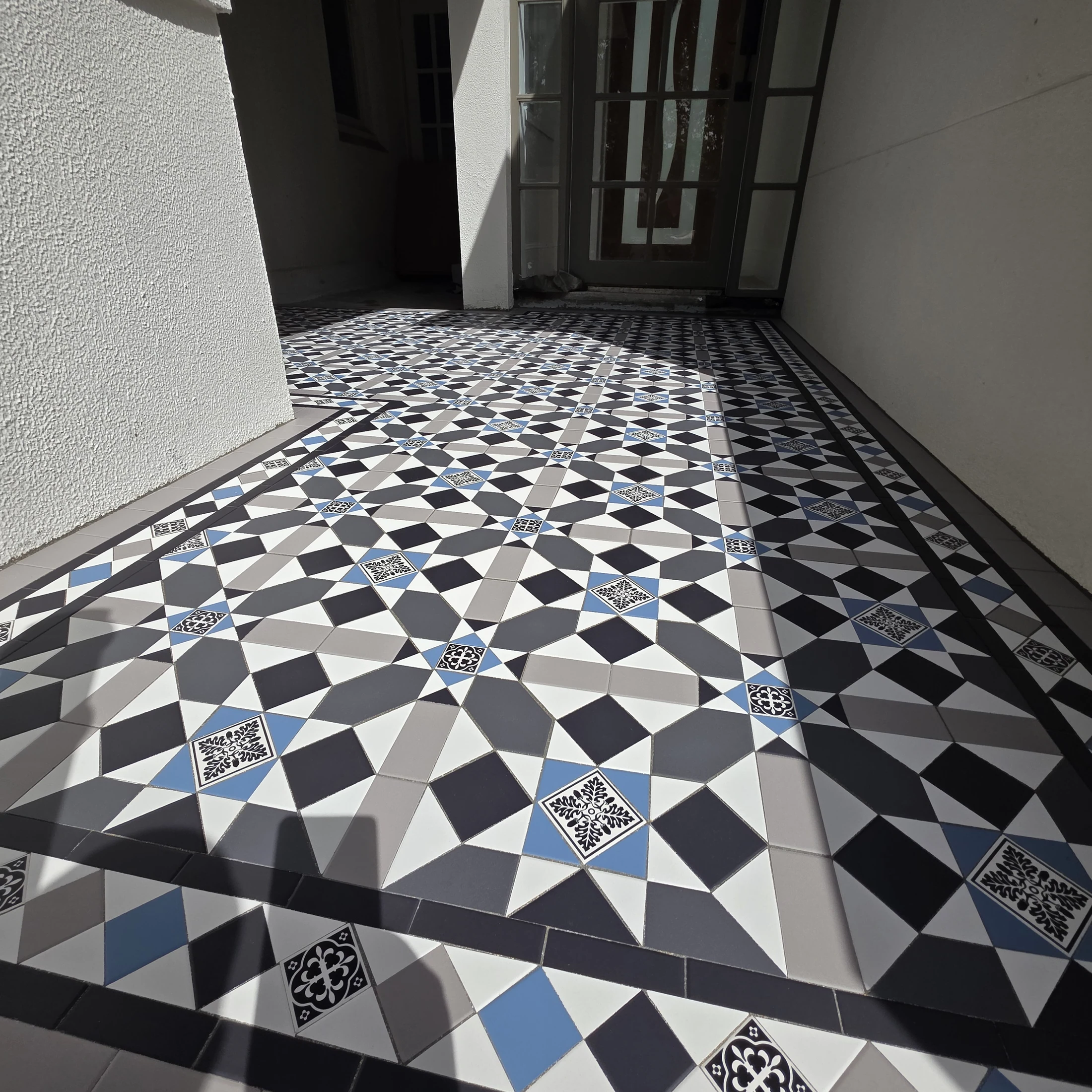
Wentworthville's built character reflects estate subdivision, railway-led growth and the changing life of a major Western Sydney locality. For a new tessellated floor, pathway or verandah, the proportions of the property and the relationship between old and new work matter as much as the pattern itself. AHTC can help with design consultation, tessellated tile supply, installation, restoration and stone bullnose or edging coordination for projects in Wentworthville.
A locality shaped by subdivision, railway and industry
Wentworthville grew from the subdivision of the Wentworth Estate and the arrival of railway access. The historical record describes a special platform serving the estate's auction and later residential growth around the railway. That history helps explain why Wentworthville contains a mix of established residential streets, later infill and active centre conditions rather than one uniform architectural character.
The locality also has an industrial story. The Bonds factory began production in Wentworthville in 1923 and became a major local employer; the historical account identifies the former factory site as heritage listed. These layers are useful design context, but they do not mean that every property is heritage listed or that every home should receive a period reproduction scheme.
Wentworthville — A Brief History, City of Parramatta History and HeritageHeritage Inventory Sheets: Wentworthville — Cumberland Heritage Study 2019
Designing with the property in view
Where an existing house has a strong front approach, verandah or established entry sequence, a tessellated layout can be developed to reinforce those proportions. Consider the direction of arrival, the width of the path, border scale, thresholds and the visual relationship between the tiled area and adjoining masonry, garden or steps. A restrained pattern can sit comfortably beside older fabric, while a more decorative layout may suit a clearly defined new work area.
For an older or individually listed property, begin with an inspection of what remains and how the proposed work meets the building. The Cumberland heritage inventory's Wentworthville example recommends retaining significant original fabric and ensuring additions respond to form, scale, bulk, setback, height, materiality and historic character. Those are property-led considerations, not a universal recipe for every Wentworthville home.
Heritage Inventory Sheets: Wentworthville — Cumberland Heritage Study 2019
Craftsmanship for paths, verandahs and existing floors
Good tessellated work depends on a resolved pattern, accurate setting-out and careful attention to edges and transitions. For a front path or verandah, the design should be checked against the approach, drainage exposure, steps and adjoining surfaces before tiles are ordered. For restoration, the first question is whether sound existing tiles and borders can be retained, with replacement or complementary work considered only after the condition and pattern have been understood.
AHTC's Wentworthville service can cover design consultation, tile supply, installation, restoration and coordination of stone bullnose or edging details. The right sequence and materials depend on the property, access and existing construction, so the work should be discussed against photographs, dimensions and the intended use of the space.
Heritage Inventory Sheets: Wentworthville — Cumberland Heritage Study 2019
Checking the relevant property context
Wentworthville is represented in Cumberland's local planning and place-making material, including work concerning the Wentworthville Centre. The locality also spans the City of Parramatta and Cumberland Council areas according to the City of Parramatta historical source. Before changing an older frontage, verandah or listed place, check the applicable property controls and seek advice from the relevant authority where needed. A heritage listing is specific to the place recorded; it is not a claim that all Wentworthville homes are protected or that AHTC provides statutory heritage approval.
Planning Proposal for Wentworthville Centre and Draft Development Controls — Cumberland City CouncilWentworthville — A Brief History, City of Parramatta History and HeritageHeritage Inventory Sheets: Wentworthville — Cumberland Heritage Study 2019
Your Heritage Tiling Questions
Does every Wentworthville home need heritage approval for tessellated tiling?
No general conclusion can be drawn from the locality's history. Heritage controls are property-specific. The Cumberland inventory identifies particular places and recommends retaining significant fabric and responding carefully to the existing setting. Check the applicable planning and heritage controls for the property before work begins.
Can a new tessellated path suit a Wentworthville period home?
It can, when the layout is designed around the home's scale, entry sequence, verandah or steps and the character of adjoining materials. A site review can help distinguish a sympathetic new design from an imitation that overwhelms the existing frontage.
Can existing tiles be restored instead of replaced?
Often the starting point is to inspect the existing floor, identify sound original areas and understand the pattern, borders and transitions. A restoration approach can then be considered alongside selective replacement or complementary new work where appropriate to the property's condition.
Does the Cumberland route cover the whole Wentworthville suburb?
The service page is presented through the Cumberland directory route, but Wentworthville is described by the City of Parramatta's official history source as spanning both Cumberland and the City of Parramatta. For property-specific planning or heritage questions, confirm which authority applies to the site.
Discuss Your Heritage Tiling Project
Share your location, project details and photographs using our enquiry form, or call 0433 932 711.