
Tessellated Tiles in Ferntree Gully
Ferntree Gully's foothills setting brings landscape, outlook and existing built fabric into the tile conversation. For a verandah, entry, pathway or interior floor, the most useful starting point is the property itself: its proportions, sightlines, surviving materials, access and relationship to the surrounding garden and street. AHTC can help coordinate design consultation, tessellated tile supply, installation, restoration and stone bullnose or edging decisions.
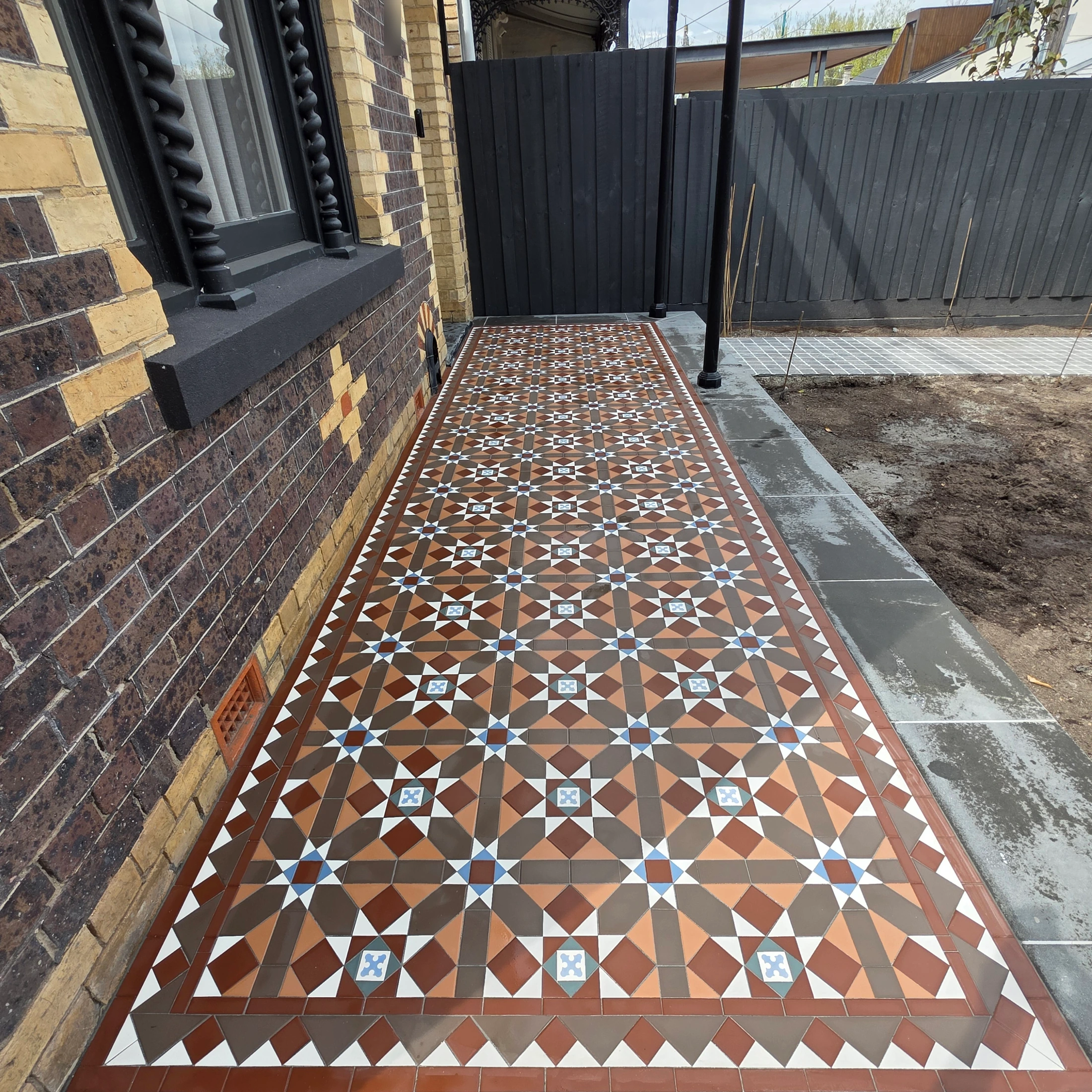
A foothills setting where landscape is part of the design
Knox's Ferntree Gully Village Structure Plan describes a bushy, forested setting with views towards the Dandenong Ranges, significant trees, low-rise buildings and undulating ground. Those characteristics make scale and transition important when planning a tiled entry, verandah or path. A pattern should be considered with the approach to the house, the garden edge, changes in level and the way the finished surface sits within the outlook.
The same plan records a village character that retains elements of a small country town. That is useful local context, but it is not a claim that every property has the same age, style or level of heritage significance. The brief should remain property-led rather than relying on a suburb-wide template.
Planning a pattern around proportion, access and outlook
For new work, begin by measuring the space and identifying the visual centre of the approach. A restrained border can clarify a narrow threshold, while a more defined field may suit a sheltered porch or larger entry. On sloping or garden-connected sites, the design discussion should also cover falls, drainage, edge conditions, stair or ramp interfaces and the relationship between tilework and planting.
Ferntree Gully's tree canopy and foothills views are part of the local setting described by Council. Tile selection can therefore be tested against the colours and materials already present rather than treated as an isolated decorative decision. Samples, dimensions and photographs of adjoining finishes help keep the final scheme proportionate to the property.
Respecting identified heritage context without assuming a listing
The Upper Gully planning-panel material identifies the Upper Ferntree Gully railway station complex as locally significant and describes retained railway buildings, canopies, planted embankments and stone-faced landscape elements. This is a meaningful local architectural context for design conversations near the station and village, but it does not make ordinary homes or all nearby properties heritage-listed.
Where a property is next to or opposite an identified heritage overlay or valued building, the panel material says new development should respect the building's appearance and significance. Before altering an older tiled surface or designing new work in a sensitive setting, confirm the current property-specific planning and heritage position with the relevant authority. A tile consultation can then focus on retaining sound fabric, matching or differentiating new work appropriately, and coordinating installation details.
A practical brief for Ferntree Gully tile work
Useful first information includes overall photographs, close views of borders and corners, approximate dimensions, access constraints and the junctions between tilework and other surfaces. For restoration, show worn, loose or missing areas as well as intact sections so the existing layout can be assessed before replacement decisions are made.
The existing Ferntree Gully service page should remain the local starting point. It can connect the suburb-specific guidance to the broader Knox directory and to the appropriate design, supply, installation, restoration and stone edging information without treating the service grouping as a complete statement of statutory jurisdiction.
Your Heritage Tiling Questions
Does living in Ferntree Gully mean my property is heritage-listed?
No. Ferntree Gully's foothills and railway history do not establish heritage listing for every property. The Upper Gully planning material identifies particular significant places and gives property-specific guidance, so check the current planning and heritage position for the individual site before work begins.
Can tessellated tiles work with a Ferntree Gully verandah or pathway?
They can be considered when the pattern, scale, drainage, level changes, edging and relationship to the garden or street are assessed together. Ferntree Gully's undulating foothills setting makes those site transitions particularly important; there is no single suburb-wide pattern that suits every property.
What should I photograph before asking about tile restoration?
Photograph the whole layout and close views of borders, corners, worn areas, missing tiles and junctions with other surfaces. Approximate dimensions, access information and any visible changes in level also help frame a restoration or new-work discussion.
Why should the foothills setting be considered in a tile design?
Council's local plan identifies tree canopy, views towards the Dandenong Ranges, low-rise buildings and undulating topography as important parts of Ferntree Gully Village's character. Considering those elements helps keep a tiled entry, verandah or pathway proportionate to its setting rather than treating the floor as an isolated pattern.
Should I check planning or heritage information before changing older tiles?
Yes, where the property may be affected by a heritage overlay, valued building or other planning control. The Upper Gully guidance specifically addresses development beside or opposite identified heritage places. Confirm the current position for the property with the relevant authority before proceeding.
Discuss Your Heritage Tiling Project
Share your location, project details and photographs using our enquiry form, or call 0433 932 711.