
Tessellated Tile Services in Scoresby
Scoresby sits in Melbourne's outer eastern metropolitan area within the City of Knox. Its local story includes earlier orchard, flower-growing and market-garden activity as well as the established residential and employment settings of the eastern suburbs. For a Scoresby verandah, entry, pathway or interior floor, tessellated tile work is best planned around the property's existing proportions, junctions and condition rather than chosen from a generic pattern alone.
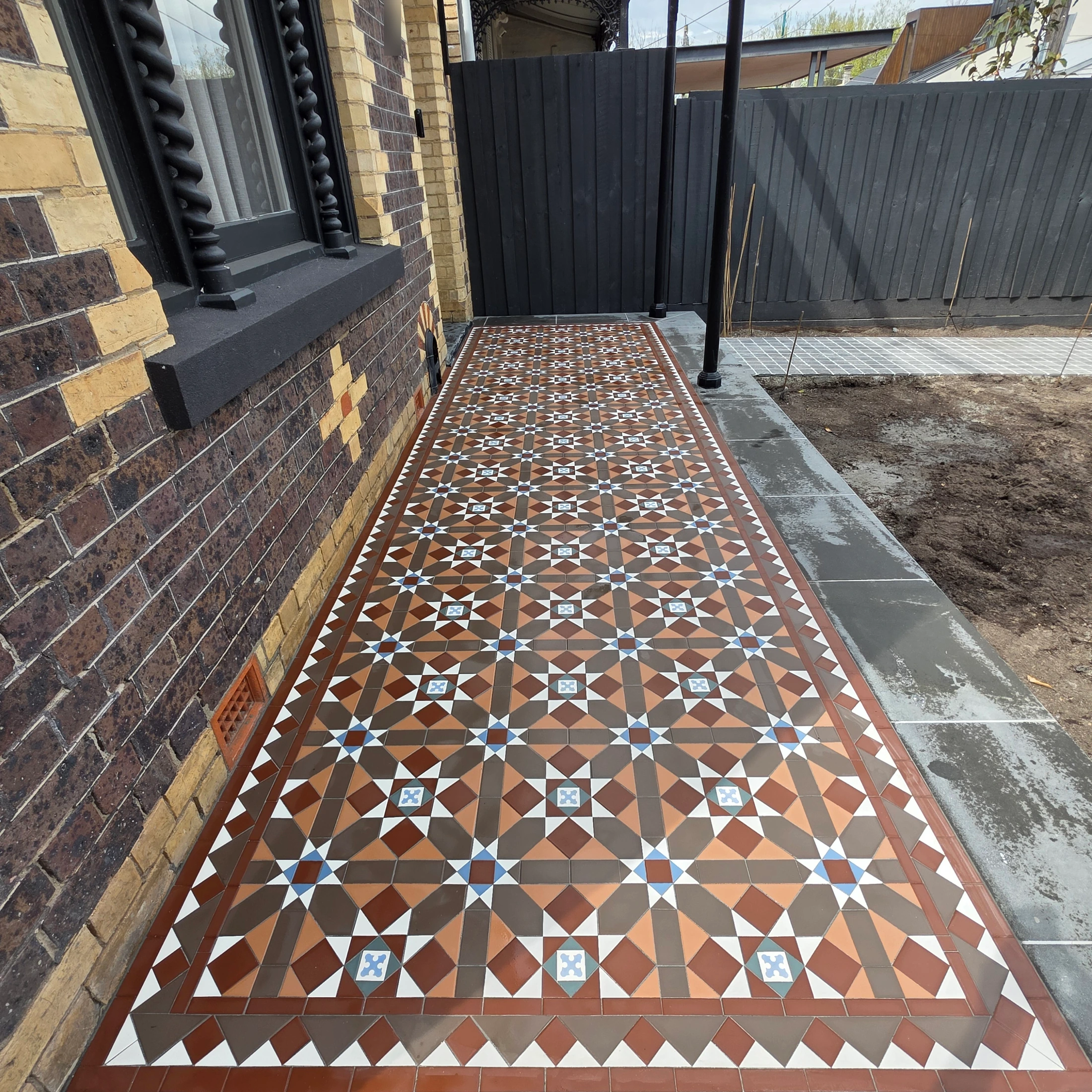
Tiling decisions for Scoresby properties
A Scoresby property may sit within an established residential street, close to a commercial or employment area, or near a site experiencing change. Those settings can affect access, sequencing, drainage and the way a new tiled surface meets a garden, driveway, threshold or adjoining building. A design review should begin with the actual site and the role of the surface: a front path needs clear transitions and durable edges, while a verandah or entrance may call for closer attention to existing levels and the relationship with the facade.
The local planning context also shows why site conditions matter. Knox planning material addresses built form, streetscape, landscape treatment, drainage, water quality and interfaces with nearby areas in relevant development settings. These are not automatic requirements for every home, but they are sensible prompts when a project changes levels, redirects water or sits beside a more intensive use. [The appropriate authority should be consulted for property-specific planning or heritage questions.]
Patterns that suit the setting
Scoresby's agricultural history is part of the wider Knox story, but it does not mean every property has a heritage designation or a single prescribed architectural style. A more useful approach is to read the house or building in front of you: retain a strong existing border where it still works, use a measured field pattern where the space is formal, and resolve corners, steps and gate lines before finalising colours or motifs.
For new work, tessellated tiles can give a verandah, porch or pathway a deliberate edge without making the whole property look over-designed. For older surfaces, matching should consider scale, colour relationships, border geometry and the condition of the surrounding substrate. Where original tiles remain, selective retention may be preferable to replacing sound material simply to achieve a uniform new finish.
Condition, edges and water management
Before restoration or installation, inspect movement, hollow or drummy areas, cracked tiles, loose edges, damp, falls and the transitions to steps or paving. The correct response depends on what is found. A localised repair may preserve more of an existing floor than wholesale replacement, while a new pathway may need its edge detail and drainage considered alongside the tile layout.
The Scoresby and Knox planning context includes attention to drainage and waterway protection in relevant development areas. That does not prescribe a universal construction method for a residential tile project, but it reinforces the value of checking how surface water leaves the site and how new work meets adjoining ground.
Design, supply, installation and restoration
AHTC can discuss tessellated tile design, supply, installation and restoration for Scoresby properties, including verandahs, entries, pathways and selected interior areas. Stone bullnose or edging coordination can be considered where the project needs a defined step, border or transition. The practical scope should be confirmed after reviewing the property, existing fabric, access and the intended finish.
For property-specific heritage or planning questions, check the relevant Victorian and local authority information before work begins. A local history reference or a building's appearance alone does not establish that the property is individually protected or that approval is automatically required.
Your Heritage Tiling Questions
Can tessellated tiles suit a newer Scoresby home?
Yes. The pattern and border can be scaled to the entry, verandah or pathway, with transitions and surrounding materials considered so the result relates to the building rather than imitating an unrelated period style.
Should an existing Scoresby tiled path always be replaced if some tiles are damaged?
No. The extent of movement, damp, loose areas and available matching material should be assessed first. Selective repair may retain sound original or established fabric, while replacement may be appropriate where the base or drainage has failed.
Does Scoresby's Knox location mean every property needs heritage approval for tiling?
No. Council location and local history do not by themselves establish an individual heritage control or an approval requirement. Check the property's planning and heritage position with the relevant authority before making a regulated change.
What should be checked before tiling a Scoresby verandah or pathway?
Review levels, falls, damp, movement, thresholds, steps, edge restraints, access and how water will move away from the finished surface. The layout should be resolved together with these practical conditions, not after the pattern has been selected.
Can AHTC help coordinate stone bullnose or edging with tessellated tiles?
Stone bullnose or edging coordination can be discussed where a project needs a defined step, border or transition. The suitable detail depends on the site's dimensions, levels, adjacent materials and intended use.
Discuss Your Heritage Tiling Project
Share your location, project details and photographs using our enquiry form, or call 0433 932 711.