
Tessellated tiles in Gordon, NSW
Gordon's local character brings together a civic and commercial centre, older residential areas and documented heritage conservation areas. For a Gordon home, verandah or pathway, a considered tile layout should respond to the building, its setting and the way the space is used. We can help coordinate tessellated tile design, supply, installation and restoration, with property-specific heritage checks kept separate from the design conversation.
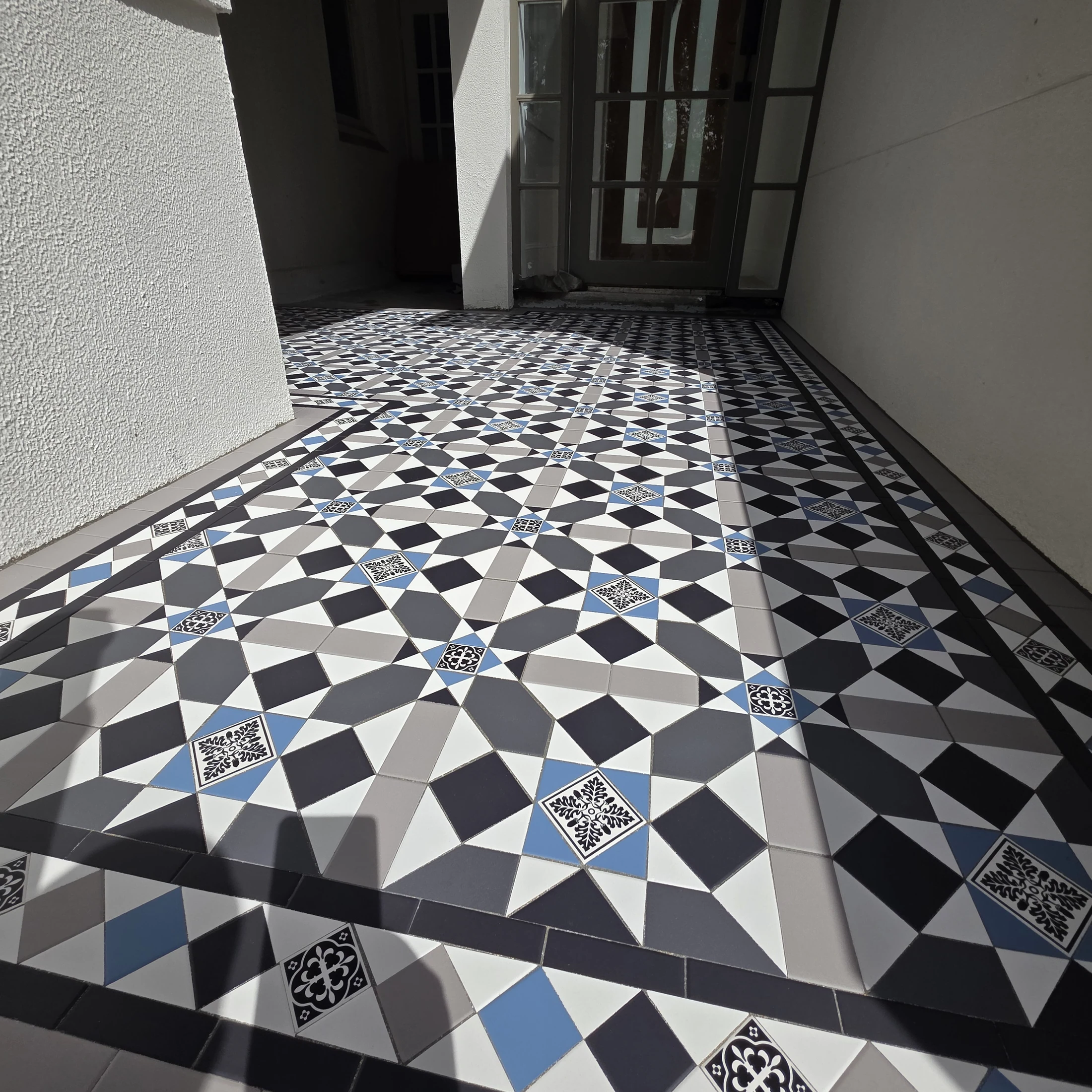
A Gordon setting with more than one architectural story
Ku-ring-gai Council's Gordon planning material describes the local centre as a civic and commercial heart, with a low-scale, fine-grained main-street character and a strong relationship between streets, trees and heritage places. The plan also records older housing generally east of the centre and heritage conservation areas in parts of those residential areas.
That mix is a useful starting point for tile decisions. A front path, porch or verandah may need to sit comfortably beside established gardens and mature trees, while a local-centre or newer setting may call for a different proportion, border treatment or transition. The right result comes from the property and the space, not from assuming every Gordon home has the same period or heritage status.
Gordon Public Domain Plan - Ku-ring-gai CouncilKu-ring-gai Council — Heritage conservation areas
Design considerations for Gordon homes and pathways
For an older house, begin by looking at the existing entry sequence: the relationship between the front door, steps, verandah, garden edge and street. A tessellated pattern can be developed around those proportions, with borders and transitions used to make the threshold feel intentional rather than visually detached from the building.
Gordon's documented tree canopy and sloping local-centre context also make practical site observations important. Access, levels, drainage, shade and the condition of existing surfaces should be considered before selecting a layout or planning installation. On a narrow path or verandah, pattern scale and edging can matter as much as colour.
When a heritage check belongs in the early conversation
Ku-ring-gai Council identifies Gordon and Gordon-and-Killara conservation-area entries and explains that conservation areas can value the combined character of buildings, fences, trees and gardens. The council recommends its heritage mapping or a Section 10.7 Planning Certificate to confirm whether a particular property is within an area.
A heritage reference does not mean every nearby home is listed, and it does not by itself determine whether a proposed tile project needs approval. If the property is listed, sits in a conservation area or is next to a heritage item, check the current council information and planning controls for that property before work proceeds.
Ku-ring-gai Council — Heritage conservation areasHeritage and density - Ku-ring-gai CouncilTransport Oriented Development - NSW Department of Planning
Craftsmanship for a lasting entry, verandah or floor
A thoughtful project balances pattern, edge detail and the existing character of the property. We can discuss tessellated tile supply, design development, installation, restoration and stone bullnose or edging coordination for the spaces that matter to you.
Where original tiles remain, restoration begins with understanding what is there and what needs to be retained. Where a new surface is planned, the layout can be developed around the architecture and the practical conditions of the site. The same careful approach applies to a front pathway, a verandah or an interior floor.
Local history as design inspiration
Ku-ring-gai Library's local-history collection records Gordon scenes including the railway station, Council Chambers, Pacific Highway, school and earlier commercial life. Those records are a reminder that Gordon's built setting has changed over time while retaining identifiable civic and residential threads.
For design inspiration, look first at the proportions, garden setting and approach to the house rather than copying a historic image. A restrained border, a clear threshold and materials that sit comfortably with the existing building can carry the sense of place without pretending that a new installation is an historic feature.
Gordon and Killara image gallery - Ku-ring-gai Library Local HistoryGordon Public Domain Plan - Ku-ring-gai Council
Your Heritage Tiling Questions
Are all Gordon homes in a heritage conservation area?
No. Ku-ring-gai Council lists particular Gordon and Gordon-and-Killara conservation-area entries and advises checking the heritage map or obtaining a Section 10.7 Planning Certificate for the individual property. A suburb name alone is not enough to establish heritage status.
Can tessellated tiles suit a Gordon verandah or front path?
They can be considered for a verandah, entry or pathway when the layout responds to the property's proportions, access, levels, drainage, garden setting and existing fabric. A site review helps determine the appropriate pattern, border and edging approach.
Should I check planning information before tiling a Gordon property?
If the property may be listed, within a conservation area, beside a heritage item or affected by another planning control, check the current Ku-ring-gai Council heritage information and the NSW Planning Spatial Viewer or other applicable planning advice for that property. The relevant requirements are property-specific.
Can existing tessellated tiles in Gordon be restored rather than replaced?
An assessment can help determine whether existing tiles and their setting are suitable for restoration, selective repair or a different approach. The decision should be based on the condition and significance of the particular surface, not on a suburb-wide assumption.
Discuss Your Heritage Tiling Project
Share your location, project details and photographs using our enquiry form, or call 0433 932 711.