
Tessellated Tiles in St Ives, NSW
St Ives sits within Ku-ring-gai's landscape and planning context, where the relationship between buildings, gardens and the wider setting matters to local character. For a new tessellated floor, verandah or pathway, the right pattern and scale should respond to the property, its approach and the way the work meets existing fabric. We can help with design consultation, tessellated tile supply, installation and restoration, including stone bullnose or edging coordination where it suits the project.
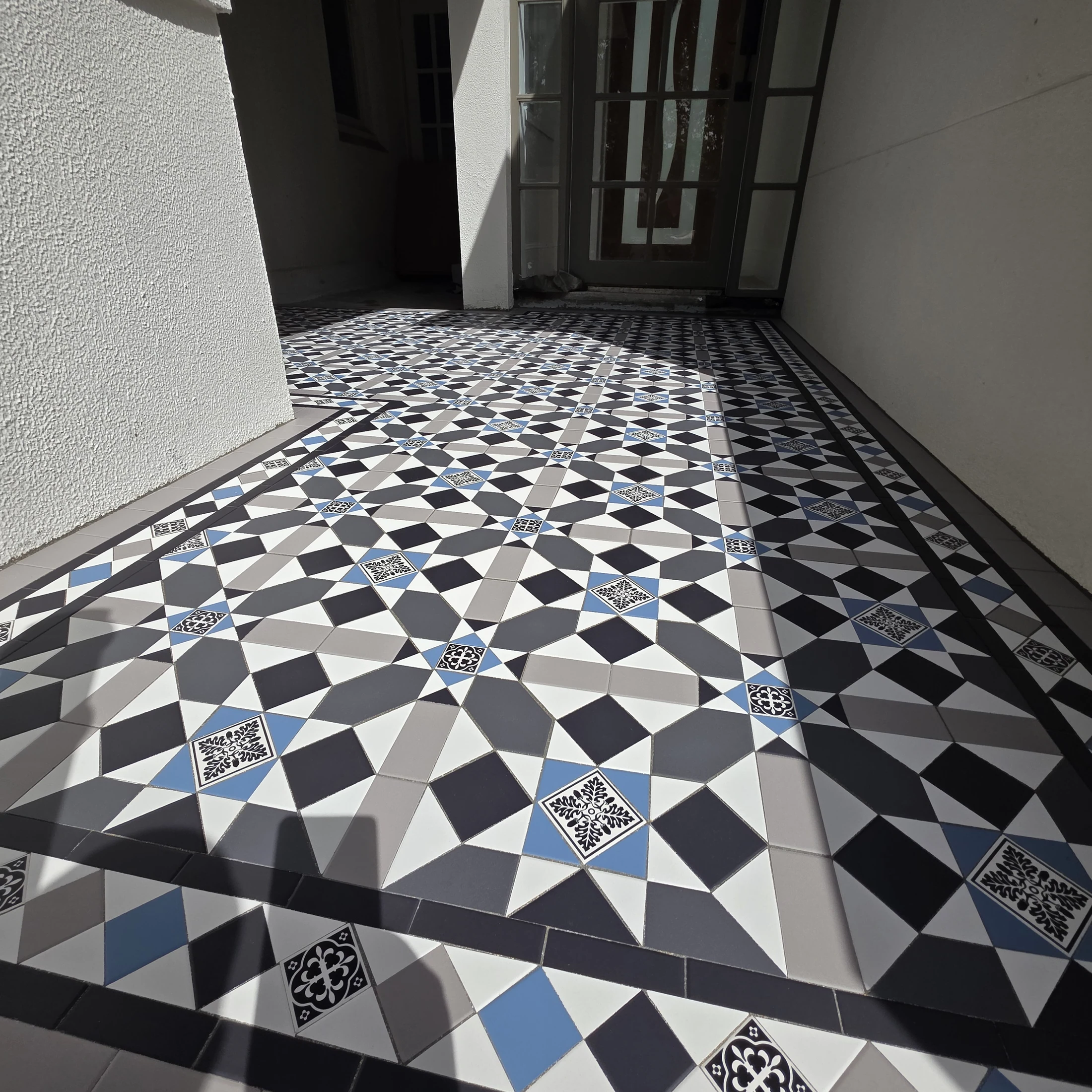
A property-led approach for St Ives homes
Ku-ring-gai Council describes local character as an interaction between landscape, buildings and culture. In St Ives, that makes the immediate setting an important starting point: consider the home's entrance sequence, garden edges, steps and the way a tiled surface is seen from the street before settling on a pattern.
The St Ives Local Centre planning material also places emphasis on planned future character, public-domain quality, pedestrian movement, setbacks and built form. Those principles are not a statement that every private home has the same design or heritage status, but they are useful reminders to treat proportion, edges and transitions as part of the design rather than as afterthoughts.
Ku-ring-gai Local Character Background StudyKu-ring-gai Development Control Plan — Part 14A St Ives Local Centre
Design inspiration: proportion, pattern and edges
For an entry or verandah, begin with the width of the space, the position of thresholds and the direction of movement. A border can clarify an edge or frame a central field, while a restrained palette can allow established planting and masonry to remain visually important. Pathway layouts should be tested against changes in level, drainage conditions and the points where paving meets lawns, garden beds or existing steps.
Where an existing tiled surface survives, record its pattern, colour relationships, border treatment and condition before choosing replacement work. Selective restoration may be more appropriate than wholesale replacement when the original fabric is significant or still serviceable. New work should be clearly considered for the particular property rather than presented as a universal period treatment.
Ku-ring-gai Local Character Background StudyKu-ring-gai Development Control Plan — Part 14A St Ives Local CentreWhat is heritage — Ku-ring-gai Council
Check the property before changing an existing surface
A St Ives address is not automatically heritage listed. Ku-ring-gai Council advises checking the Local Environmental Plan, heritage maps and the relevant property information to establish whether a place is a heritage item or sits within a heritage conservation area. Council explains that a heritage item listing covers the property as a whole, while a conservation-area listing covers building exteriors and setting.
If the property is listed or within a conservation area, the proposed tile work should be considered alongside the place's significance and the applicable controls. Council identifies pathways including pre-development consultation and, where the work qualifies, minor heritage works or a development application. A tile consultation can help document the existing surface and develop a design brief, but it does not replace Council's planning advice or an approval decision.
What is heritage — Ku-ring-gai CouncilDevelopment controls and approvalsKu-ring-gai Council — Heritage conservation areas
Craftsmanship for new work and restoration
Good results depend on careful setting-out, considered transitions and a finish that suits how the space will be used. Design consultation can address pattern scale, borders, thresholds and edging before supply and installation are coordinated. For restoration, the first step is to understand what remains, what has moved or failed, and which details are worth retaining.
Bring photographs and dimensions of the area, along with any available information about the house or existing tiles. This helps separate a new design brief from a restoration assessment and keeps choices grounded in the actual entrance, verandah or path rather than a generic period label.
Ku-ring-gai Local Character Background StudyWhat is heritage — Ku-ring-gai Council
Your Heritage Tiling Questions
Is every home in St Ives heritage listed?
No. Heritage status is property-specific. Ku-ring-gai Council directs owners to the Local Environmental Plan schedule, heritage mapping and, where formal confirmation is needed, a Section 10.7 Planning Certificate. A suburb-wide location does not by itself establish a listing.
Can I install new tessellated tiles if my property is in a conservation area?
Possibly, but the answer depends on the property, the proposed work and the applicable controls. Council explains that conservation-area controls protect the special character of the area and recommends checking the relevant planning documents and seeking appropriate Council advice before work begins.
Should an old St Ives tiled path be restored or replaced?
Start with a condition and significance assessment. Photograph the existing pattern, borders, edges and damaged areas, then consider whether selective repair can retain useful original fabric or whether a new design is more suitable. Heritage listing does not prohibit all change, but proposed work should respond to the place and its applicable controls.
What should I bring to a tile design consultation?
Useful starting information includes photographs, approximate dimensions, the intended use of the area, details of steps or thresholds, and any existing tile fragments or records. If you know the property has a heritage listing or sits in a conservation area, include that information so the design discussion can remain property-specific.
Discuss Your Heritage Tiling Project
Share your location, project details and photographs using our enquiry form, or call 0433 932 711.