
Tessellated Tiles in College Park
College Park has a compact architectural character, from bluestone dwellings and row forms along North Terrace to early twentieth-century bungalows around Trinity Street. For a pathway, verandah or interior floor, tessellated tile choices can be developed around the home's proportions, existing materials and the way the work meets the street. AHTC provides design consultation, tessellated tile supply, installation and restoration guidance for College Park projects.
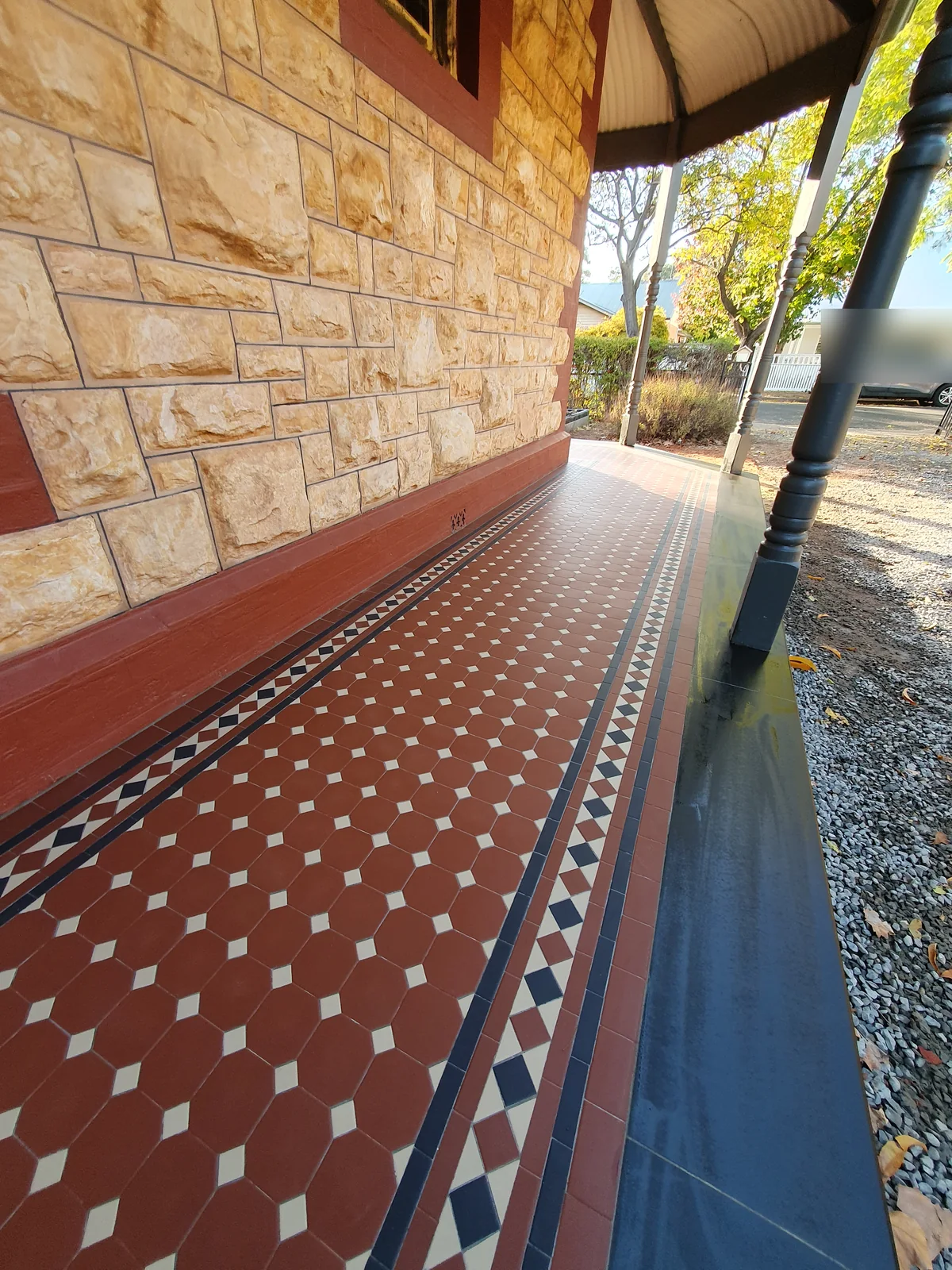
Tiling choices that respect College Park's streetscape
The local character material records a mix of dwelling styles dating from 1865 to 1940, including bluestone detached and row dwellings on North Terrace and bungalows on Trinity Street. That variety calls for a property-led approach rather than one assumed pattern for the whole suburb. Border scale, field geometry, tonal contrast and the transition at a threshold can be considered alongside the existing facade and front setback.
Where a visible path or verandah sits close to the street, the layout can be planned to work with the home's established rhythm and the small setbacks noted in the council character description. Established trees and the relationship between paving, entries and garden edges also matter to the finished composition. These are design considerations, not a claim that every College Park property has the same heritage status.
For bluestone, bungalow and Federation-era homes
A bluestone frontage, a bungalow entry or a Federation-era interior may each need a different response. Existing tiles can be assessed for retained areas, colour relationships and transitions before new work is specified. For a new verandah or pathway, the pattern can be developed to sit comfortably with the home's scale without pretending that a historic design is automatically required.
College Park's documented architectural history includes a transition from Federation forms toward Inter-War styles. That context can inform proportion and detailing, while the actual property, its condition and the proposed scope remain the basis for design decisions.
Check the property context before changing original fabric
The South Australian Heritage Places Database records a confirmed State Heritage Place at Trinity Street, and council material identifies Local Heritage Places and buildings that may fall within relevant planning controls. A heritage-sensitive tiling brief should therefore begin by checking the particular property and proposed work, rather than assuming a suburb-wide rule.
The council's Heritage Advisory Service is available for heritage-related design advice before a development application for relevant properties and overlays. AHTC can help document the tiling design question, existing fabric and intended changes so the owner can seek the appropriate property-specific advice.
Design, supply, installation and restoration
A College Park enquiry can cover a new tessellated layout, coordinated tile supply, installation planning, restoration of surviving tiles or stone bullnose and edging coordination. The useful starting details are the location of the work, whether tiles are existing or proposed, the areas exposed to weather and the relationship to steps, thresholds or garden edges.
For restoration, the aim is to understand what can be retained and where a compatible new section is needed. For new work, the design can be developed around the property's architecture and practical circulation without making unsupported assumptions about approvals, materials or substrate conditions.
Your Heritage Tiling Questions
Does every College Park home require heritage approval for tiling work?
No general suburb-wide conclusion should be drawn. College Park includes documented Local and State Heritage Places, but requirements depend on the particular property, overlay and proposed work. Check the property through the relevant council and South Australian heritage planning channels before changing original fabric.
Can tessellated tiles work with a College Park bluestone or bungalow frontage?
They can be designed as part of a property-led scheme. The local character evidence records bluestone dwellings and early twentieth-century bungalows, so scale, border proportion, colour relationships and the transition to existing steps or paths should be considered with the individual frontage rather than copied from a generic pattern.
Can existing tessellated tiles be restored instead of replaced?
An assessment can consider retained areas, condition, pattern continuity and how any new section will meet the original work. The appropriate approach depends on what remains on the property and the scope of the proposed repair; an inspection or clear project photographs are useful starting information.
Can new tiles be planned for a verandah or pathway in College Park?
Yes. A layout can be developed for a verandah, entry or pathway with attention to proportions, thresholds, weather exposure, drainage interfaces and the relationship to the house and garden. Where the property has heritage controls or sits in a relevant overlay, obtain property-specific planning advice before work begins.
Discuss Your Heritage Tiling Project
Share your location, project details and photographs using our enquiry form, or call 0433 932 711.