
Tessellated Tiles Kent Town
Kent Town brings together historic homes, former industrial buildings, institutional landmarks and newer mixed-use development. For a tessellated tile project here, the right approach starts with the property itself: its architectural proportions, surviving surfaces, street relationship and the practical demands of the site. AHTC can help with design consultation, tessellated tile supply, installation, restoration and stone bullnose or edging coordination.
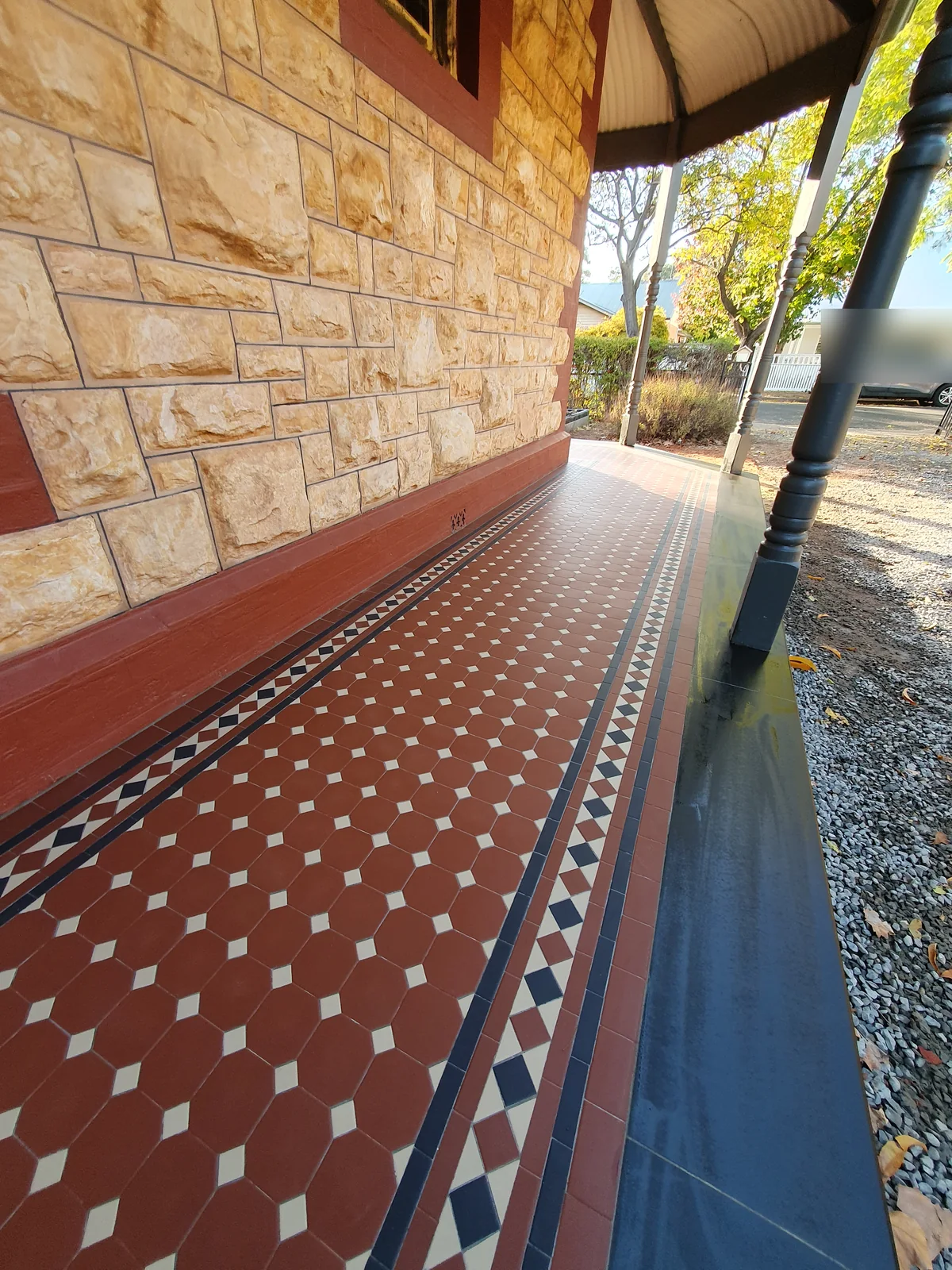
Designing for Kent Town's changing character
Council material describes Kent Town as a neighbourhood with diverse built form and mixed land uses, divided into Urban Character and Historic Character precincts. That makes a property-led design review more useful than assuming one standard Kent Town look. A new pattern beside a contemporary extension may need a different balance of scale, colour and border detail from repairs to a long-standing villa, terrace or shopfront.
The surrounding setting also matters. Streets, laneways, thresholds and public-facing edges can be important parts of how a tiled area reads from the street. Design consultation can consider the relationship between the proposed work and the existing entry, verandah, pathway or commercial frontage without treating council guidance as a substitute for a property-specific assessment.
When existing fabric needs a careful assessment
Kent Town has multiple State Heritage Places and a documented collection of historic villas, terrace houses, shops, churches and former industrial buildings. If an existing tiled floor, verandah or pathway may contribute to a property's character, begin with an assessment of what remains before deciding whether to repair, selectively replace or install new work.
A heritage listing is property-specific, and not every Kent Town home is listed or protected in the same way. Owners should confirm the property's status and any applicable development requirements with the relevant council or Heritage South Australia before works that may affect listed fabric or its setting. AHTC's role is to help with the tiling design and technical conversation, not to provide heritage approval.
Verandahs, pathways and stone edging
For a Kent Town verandah or pathway, proportion and transition details deserve as much attention as the tile field. The design may need to resolve door thresholds, changes in level, drainage exposure, steps, borders and the connection between a private entry and the public-facing streetscape. Where an edge is part of the design, stone bullnose or other edging coordination can be considered alongside the tile layout rather than added as an afterthought.
The existing surface and substrate should be assessed on site before specifying an installation or restoration sequence. This is especially important where an older surface meets later alterations, mixed-use access requirements or a frequently used frontage. The suitable method depends on the actual condition and construction, not on a universal Kent Town recipe.
From pattern selection to installation
AHTC can assist with pattern and colour direction, tessellated tile supply, installation and restoration planning. For a new area, the conversation can cover the intended period relationship, layout, border treatment and how the work will meet adjoining materials. For an existing floor, it can focus on condition, feasible retention and an appropriate repair or replacement scope.
Kent Town's combination of established residential streets, commercial edges and changing mixed-use areas means access, sequencing and day-to-day use should be discussed early. A site review can help distinguish design decisions from matters that need confirmation by the owner, builder, council or heritage authority.
Your Heritage Tiling Questions
Does every Kent Town property require heritage approval for tiling work?
No. Kent Town contains listed heritage places, but listing and approval requirements are property-specific. Check the property's status and proposed scope with the City of Norwood Payneham & St Peters or Heritage South Australia before work that may affect listed fabric or its setting.
Can tessellated tiles suit a newer Kent Town extension or mixed-use frontage?
They can, provided the pattern, scale, borders and transitions are designed for the building and its setting. Kent Town includes both historic and urban character precincts, so the design should respond to the particular property rather than copy a historic pattern automatically.
What should be checked before restoring an older tiled verandah in Kent Town?
First check the condition and extent of surviving tiles, the substrate, moisture or movement issues, thresholds and any later alterations. Then consider whether selective repair, careful matching or a new complementary section is the most suitable response. A property-specific heritage check may also be needed.
Can a Kent Town pathway include stone bullnose or edging?
Stone bullnose or edging can be coordinated where it suits the path, steps, thresholds and adjoining materials. The profile, fall, drainage and available space should be assessed as part of the overall layout rather than selected independently.
Discuss Your Heritage Tiling Project
Share your location, project details and photographs using our enquiry form, or call 0433 932 711.