
Tessellated Tiles Royston Park
For a Royston Park home, a tessellated tile scheme can connect the front path, verandah and entrance with the property's proportions and street presentation. We can discuss pattern direction, border treatment, tile supply, installation and restoration around the existing building rather than treating every site as the same. Royston Park sits within Adelaide's inner eastern suburbs and local council material places it in a documented inter-war housing and built-form context, so retaining sound original fabric can be an important part of the design conversation.
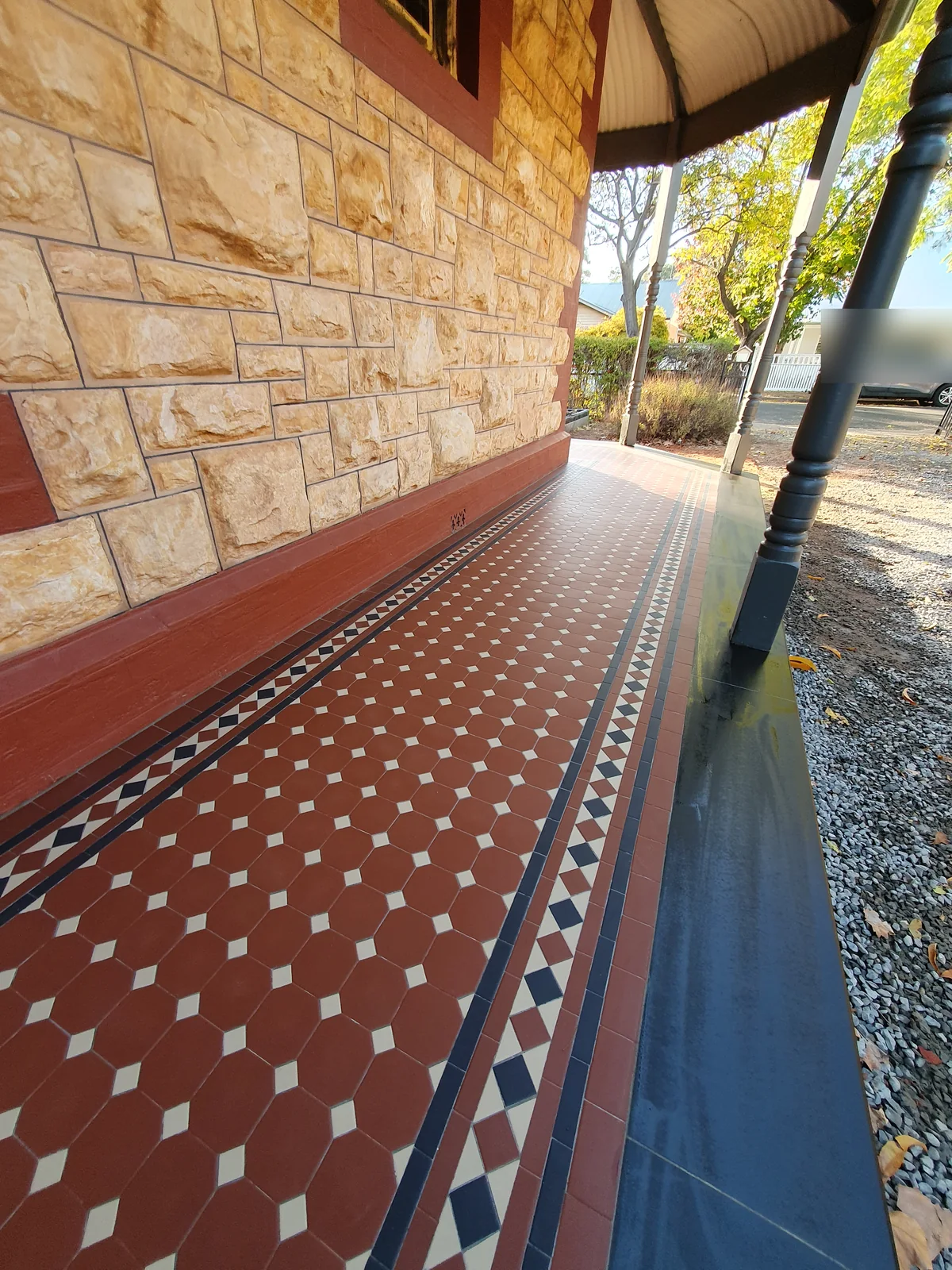
Tessellated tile choices for Royston Park homes
The City of Norwood Payneham & St Peters identifies a St Peters, Joslin and Royston Park policy area with local considerations for dwelling form, street presentation and land division. For a tile project, that context makes the relationship between the tiled surface and the front elevation worth considering: a restrained border, a clear threshold and proportions that suit the existing verandah can often be more appropriate than an over-scaled new pattern.
Council material also places parts of Royston Park in the local inter-war housing story. That is useful design context, not a claim that all houses share one period style or that every property is heritage listed. We can assess the building, access, exposure and the condition of any surviving tiles before recommending a new layout or restoration approach.
Design, supply and installation for paths and verandahs
A Royston Park enquiry may involve a new front path, a verandah floor, an entrance transition or a more contained repair. Design consultation can help settle the pattern, field and border relationship before supply and installation are coordinated. The finished layout should respond to the actual width, falls, thresholds and movement through the site rather than relying on a generic suburb template.
Where a new tiled area meets older paving, masonry or steps, the junction deserves as much attention as the pattern. We can discuss visual continuity, practical edging and stone bullnose or other edging coordination as part of the broader design and installation brief.
Restoring existing tiles with a property-led approach
If original or older tessellated tiles remain, restoration starts with understanding what is present: loose or missing pieces, worn surfaces, previous patching, damp or movement and the visual importance of the surviving field and border. Selective repair may be preferable to replacing a sound area, while a new adjoining section may need to be designed as a respectful continuation rather than a forced match.
The council provides heritage places and heritage advisory resources, and its inter-war amendment material refers to individual Royston Park sites as well as a separate historic-area outcome in Heathpool. Heritage status and development requirements are property-specific, so owners should confirm the current planning position for their site before assuming that a tile repair or alteration needs, or does not need, approval.
Planning a Royston Park tile project
Useful first information includes photographs of the existing surface, approximate dimensions, the property location within Royston Park and whether the work is a repair, a replacement or a new tiled area. It also helps to note steps, drainage points, gates and any places where the tile will meet existing stone or paving.
From there, the brief can be shaped around the home's architecture and the site's practical constraints. The aim is a durable, legible result that supports the property rather than an automatic period claim or a one-size-fits-all pattern.
Your Heritage Tiling Questions
Are all Royston Park homes heritage listed?
No. Council material refers to individual Royston Park sites within an inter-war heritage proposal and separately identifies a specific historic-area outcome in Heathpool. Heritage status is property-specific, so check the current planning and heritage position for the individual site rather than assuming that the suburb has one blanket listing.
Can tessellated tiles suit an inter-war home in Royston Park?
They can, provided the pattern, scale, border and transitions are selected around the existing building and surviving fabric. Local council material places parts of Royston Park within an inter-war housing context, but the right design still depends on the particular home's proportions and condition.
Is restoration better than replacing an older tiled path?
It depends on what remains and why it has failed. A condition review can distinguish sound original areas from loose, missing or damaged sections and help compare selective restoration with a new adjoining layout. Keeping usable original fabric can preserve more of the property's visual history, but it should not be assumed without inspecting the surface.
What should I check before changing tiles on a Royston Park property?
Check the current planning and heritage information for the individual property, particularly if the work changes a prominent frontage, affects an identified place or alters a valued streetscape element. Council planning material identifies local built-form considerations for the St Peters/Joslin/Royston Park policy area; it is not a substitute for a site-specific assessment.
Discuss Your Heritage Tiling Project
Share your location, project details and photographs using our enquiry form, or call 0433 932 711.