
Tessellated tiles in Prahran
Prahran’s built character combines a busy inner-Melbourne activity centre with residential streets shaped by nineteenth-century subdivision and later Victorian and Edwardian development. For a verandah, entry, pathway or interior floor, tessellated tiling can be planned around the proportions and surviving details of the property rather than treated as a one-size-fits-all pattern. AHTC can assist with design consultation, tessellated tile supply, installation, restoration and stone bullnose or edging coordination.
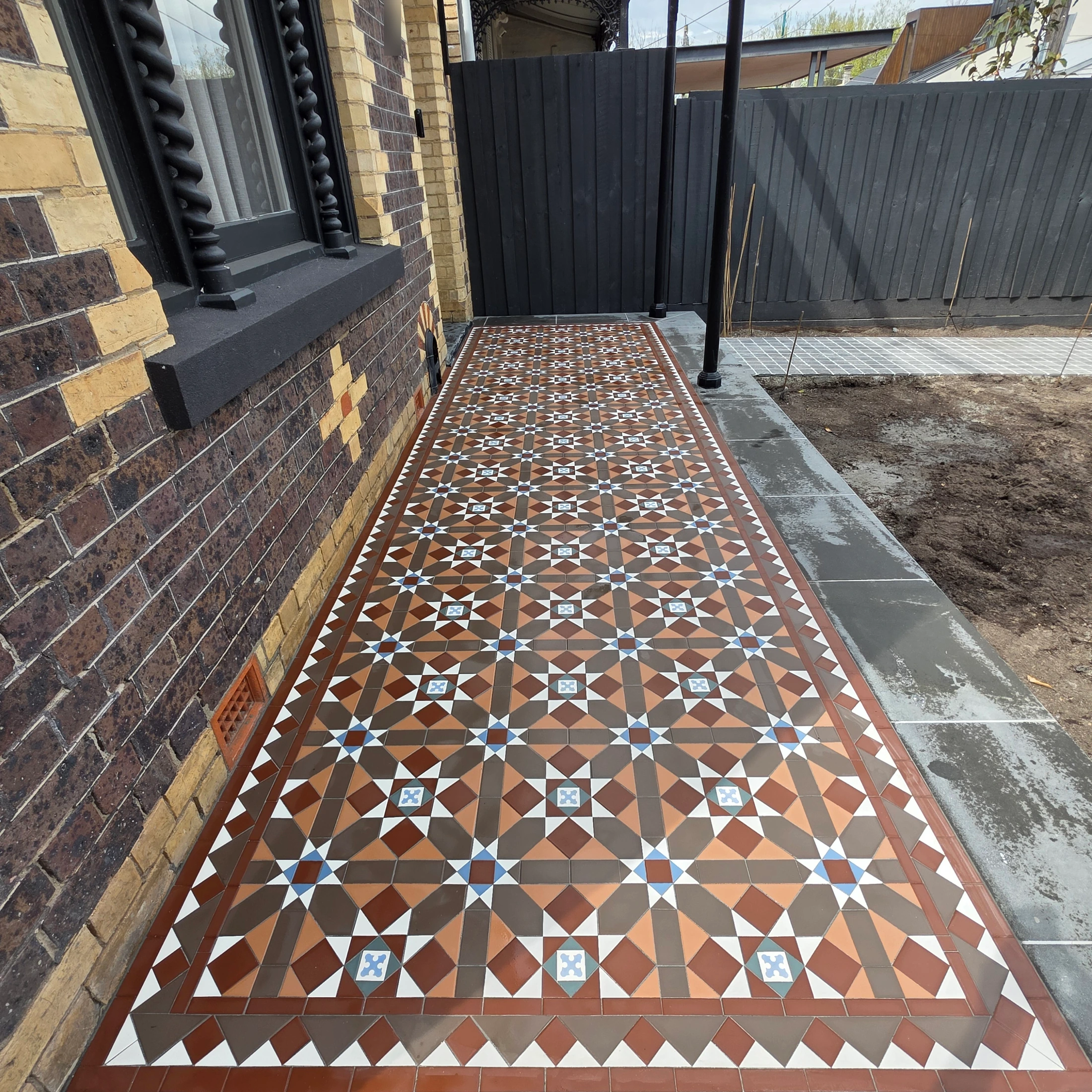
Tiling that responds to Prahran’s property context
The Prahran and Windsor heritage review records early timber and brick cottages on narrow allotments, followed by more ornate single-fronted Victorian and Edwardian terraces during the growth of the late nineteenth century. That history does not mean every Prahran house is heritage-listed, but it does make the relationship between a new tiled surface and the existing frontage, threshold, fence and verandah worth considering.
For a front verandah or pathway, begin with the available width, sightlines and the position of steps and doorways. A restrained border or a pattern aligned with the building can help a new surface sit comfortably beside existing brick, rendered masonry, bluestone or painted timber. Where an older tiled area survives, condition assessment and careful matching should come before removal or replacement.
Prahran is also changing around its activity-centre core, with taller development concentrated in selected areas and transitions towards surrounding residential streets. On a contemporary alteration, the tile choice can acknowledge the building’s immediate material palette without pretending that new work is original fabric. Design consultation can cover pattern, scale, colour balance, edge treatment and the practical sequencing of supply and installation.
Check the property before changing visible fabric
Stonnington advises that a Heritage Overlay can protect a building or place and that some external changes may require a planning permit. The council specifically recommends checking the property’s overlays and considering the significance of the place, the street presentation and compatible materials before designing alterations.
This is a property-specific planning check, not a statement that all Prahran homes are protected. If your work affects a visible verandah, entrance, steps, pathway, edging or another exterior element, confirm the applicable controls with the relevant authority before proceeding. A tiling consultation can then work from the existing conditions and the approved design direction.
Design, supply, restoration and installation
AHTC’s Prahran service can cover design consultation for a new tessellated layout, sourcing and supplying tiles, installation planning, restoration of suitable existing work and coordination of stone bullnose or edging. The right approach depends on what is present on site, how the area is used and whether the goal is a sympathetic new design, a close repair or a carefully distinguished contemporary addition.
For an initial discussion, useful information includes the approximate dimensions, photographs of the current surface and edges, the location within the property, and any known planning or heritage advice. These details help frame the design conversation without assuming a substrate, pattern or approval outcome in advance.
Your Heritage Tiling Questions
Do all Prahran properties need heritage approval for tiling work?
No. Heritage controls are property-specific. Stonnington says that a Heritage Overlay may require a planning permit for certain exterior works, while routine repairs that do not change appearance may generally not require one unless the overlay says otherwise. Check the property’s current overlays and obtain the relevant advice before changing visible fabric.
Can tessellated tiles suit a Prahran terrace or cottage?
They can, provided the design responds to the building and setting. Prahran’s heritage review records both early cottages and later Victorian and Edwardian terraces, so proportion, threshold detail, verandah width, existing materials and the degree of surviving fabric should guide the pattern and edge treatment rather than a generic period label.
What should I consider for a Prahran verandah or pathway?
Start with the available width, steps, drainage and transitions at the door and footpath. Then consider how the pattern, border and edging relate to the frontage and nearby materials. If an older surface remains, document its condition before deciding whether restoration, selective repair or new work is the better fit.
Can you help with restoration as well as new tessellated tiling?
Yes. The service scope can include design consultation, tessellated tile supply, installation, restoration and coordination of stone bullnose or edging. The suitable sequence depends on the existing surface and the property-specific design brief, so an assessment is preferable to assuming that removal or replacement is necessary.
Discuss Your Heritage Tiling Project
Share your location, project details and photographs using our enquiry form, or call 0433 932 711.