
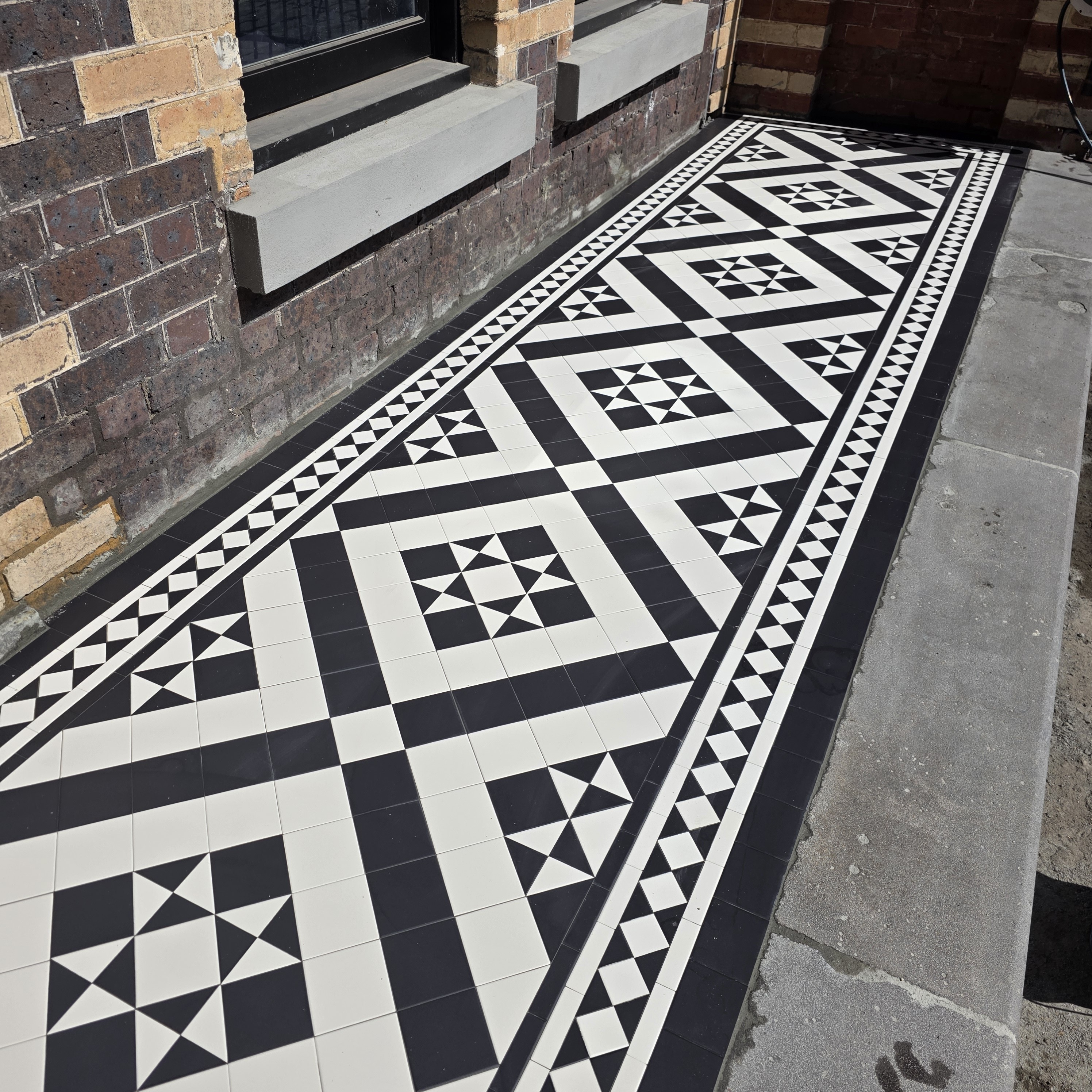
Middle Park, VIC
Middle Park VIC tessellated tiling
Supply and installation tessellated tiles for the verandah and restored bullnose edging in Middle Park, VIC.
Read the projectUse this Port Phillip area directory to find locality-specific heritage tiling guidance. Port Phillip brings together bayside neighbourhoods with distinct histories, including the former municipalities of South Melbourne, St Kilda and Port Melbourne. For a verandah, path, entry or interior floor, a considered tessellated tile scheme should respond to the building, the surrounding streetscape and the condition of any surviving fabric. Authentic Heritage Tiling Co provides design consultation, tessellated tile supply, installation, restoration and stone bullnose or edging coordination across Port Phillip.
The City of Port Phillip's own history material records the separate histories of South Melbourne, St Kilda and Port Melbourne before their combination in 1994. That layered history is useful context when selecting a tile pattern or restoring an older surface, but it does not mean that every property shares the same character or heritage status.
Council's Port Phillip Heritage Review identifies heritage precincts and individual place citations. Its Heritage Policy Map and Neighbourhood Character Policy Map distinguish different property and streetscape circumstances, so a local design should begin with the particular building and site rather than a generic period label.
History and heritage | City of Port PhillipPort Phillip Heritage Review
For a new tessellated surface, start with the proportions and visual weight of the space. A border can frame a narrow verandah or pathway, while a restrained field pattern may sit more comfortably where the architecture already has strong doors, ironwork, masonry or joinery. Colour and motif choices are best tested against the building's fixed finishes and the way the edge meets steps, garden paths or thresholds.
Where an older floor or verandah survives, matching should be based on what remains: tile dimensions, colour relationships, pattern, border and transition details. A carefully planned repair may preserve more character than replacing an entire surface simply because some areas are worn. New work should be clearly considered alongside the existing fabric rather than presented as a universal period solution.
Port Phillip Heritage ReviewHeritage advice | City of Port Phillip
Port Phillip Council advises property owners to use the current planning-scheme maps to check whether a property is within a Heritage Overlay. The council's heritage material also distinguishes significant, contributory and non-contributory properties, and notes that contributory places may be identified through the neighbourhood-character mapping even where a Heritage Overlay does not apply.
The Victorian Heritage Overlay clause can require a permit for listed kinds of works, including some external alterations, visible services, fences, verandahs, repairs or routine maintenance that changes appearance. Requirements depend on the property and the applicable schedule. Heritage advice can help inform the design, but tile work should not be described as council-approved or automatically exempt without a property-specific check.
Heritage advice | City of Port PhillipClause 43.01 Heritage Overlay | Port Phillip Planning Scheme
A useful first conversation covers the intended setting, the existing surface, access, edges and transitions, and whether the priority is conservation, a new installation or a sympathetic combination of old and new. Design consultation can then guide pattern and colour choices before supply and installation are coordinated.
For restoration, the aim is to understand what can be retained and how repaired areas will sit beside surviving tiles. For new verandahs and pathways, edging and stone bullnose details should be resolved with the levels, thresholds and surrounding materials in view. The final approach remains specific to the property and the condition found on site.
Heritage advice | City of Port PhillipClause 43.01 Heritage Overlay | Port Phillip Planning Scheme
Port Phillip Council publishes the Heritage Review, heritage maps, heritage advice and information about ongoing precinct reviews. These resources are useful starting points for checking the planning context of a property before external changes are designed. Council also describes a free Heritage Advisory Service for eligible owners and occupiers, including guidance on restoration and sourcing materials or trades-persons.
Use the local guidance alongside a property-specific assessment and a clear tile brief. Authentic Heritage Tiling Co can help coordinate the design, supply, installation or restoration conversation without assuming that a suburb name alone establishes a heritage control.
Port Phillip Heritage ReviewHeritage advice | City of Port PhillipHeritage Program | City of Port Phillip
Middle Park, VIC
Supply and installation tessellated tiles for the verandah and restored bullnose edging in Middle Park, VIC.
Read the project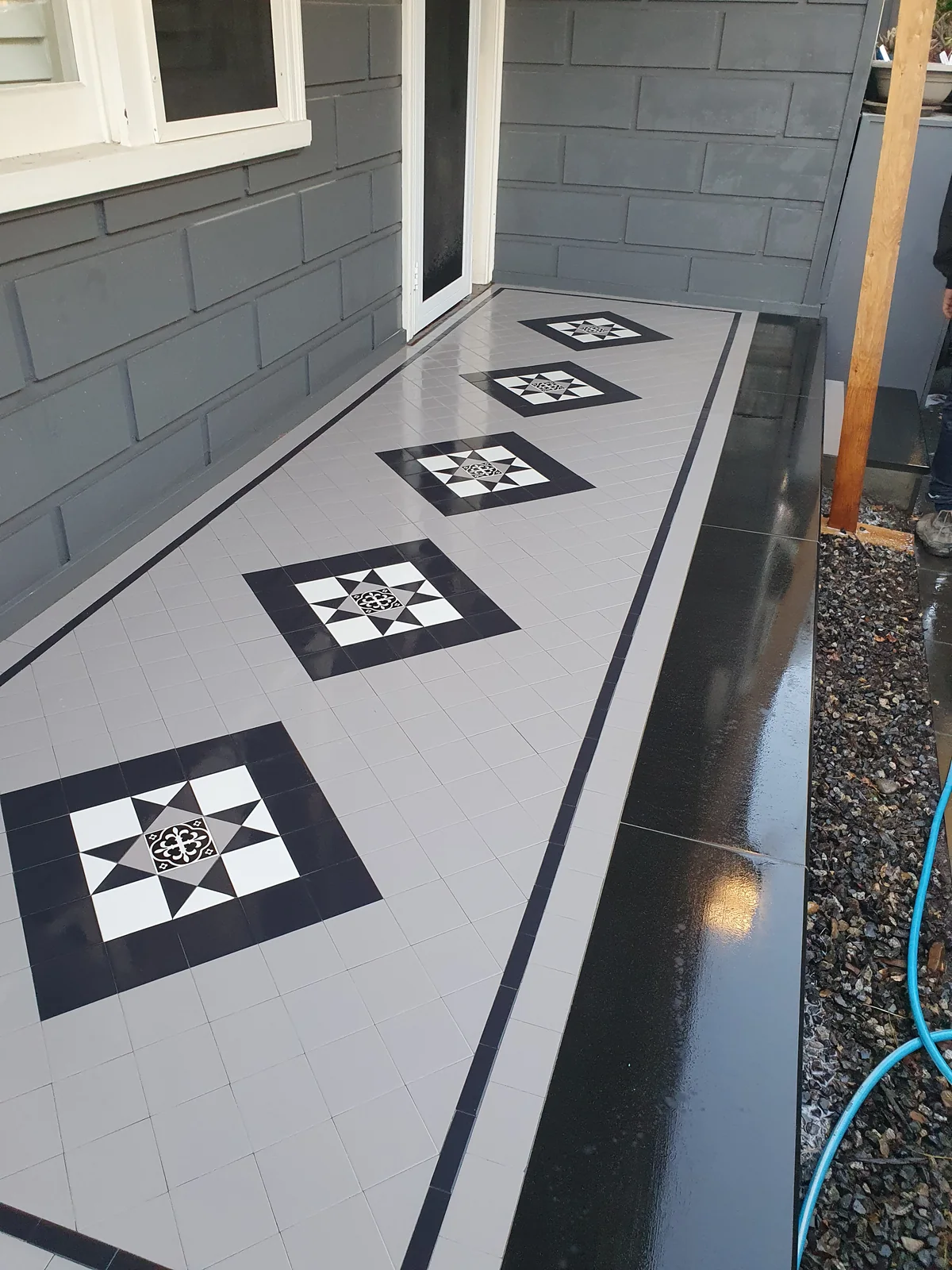
Port Melbourne, VIC
Supply and installation tessellated tiles for the entrance in Port Melbourne, VIC.
Read the project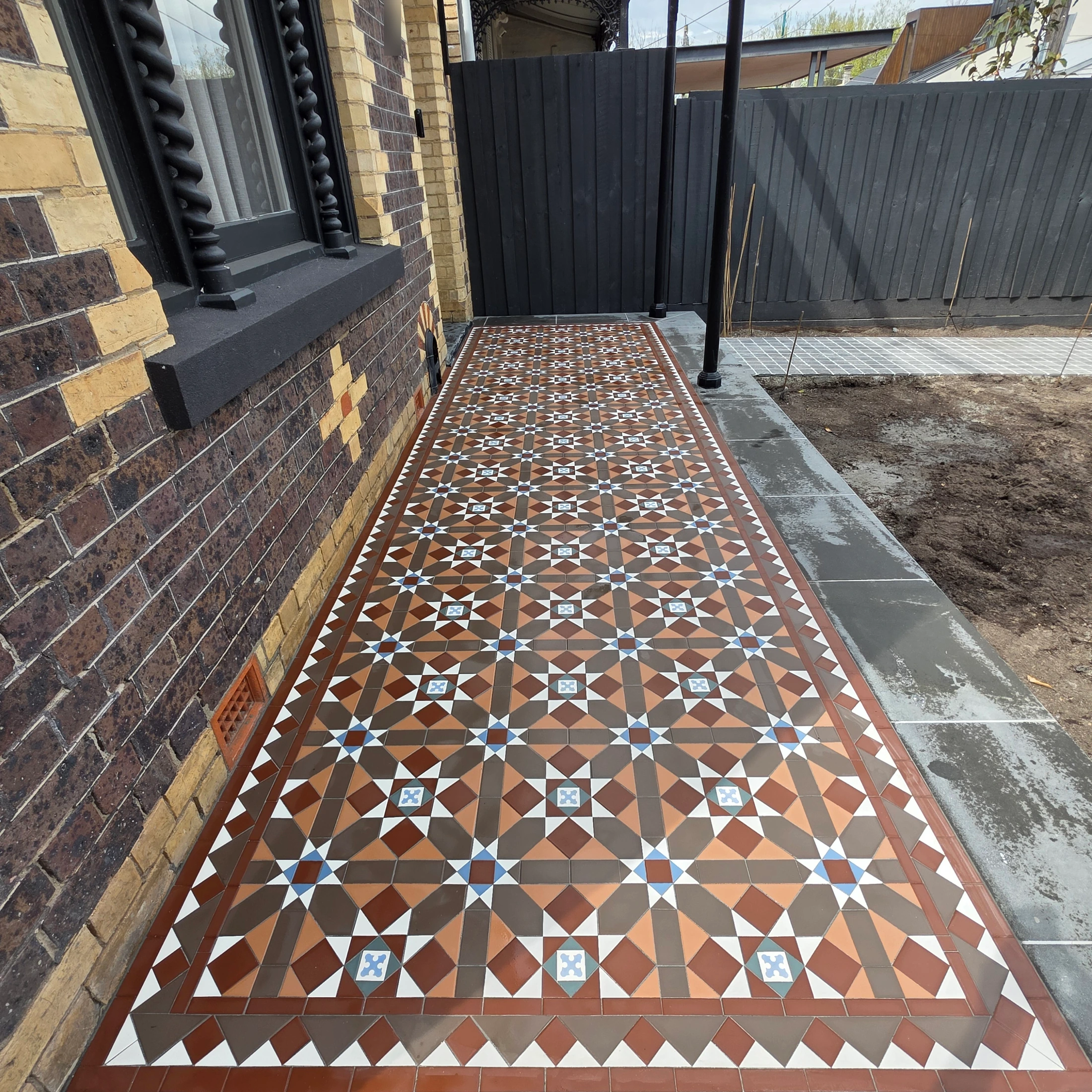
Windsor, VIC
Supply and installation of a Dingle verandah matching the original entrance landing design, colourway and border, with existing bluestone retained.
Read the projectNo. Port Phillip Council's heritage advice explains that the Heritage Policy Map identifies properties within heritage overlays and records different grading categories, while the Neighbourhood Character Policy Map identifies some contributory places outside a heritage overlay. Check the current planning-scheme maps for the individual property.
It depends on the property, the proposed work and the applicable Heritage Overlay schedule. The Victorian Heritage Overlay can require permits for specified external alterations, construction or works, and repairs or routine maintenance that changes appearance. Confirm the planning context before commencing work.
Often the first question should be what can be retained, matched or repaired. A site assessment can consider surviving tiles, pattern, borders, transitions and the condition of the base before a replacement decision is made. The appropriate method is property-specific.
Start with the Port Phillip Heritage Review and the council's heritage advice page, then check the current planning-scheme maps for the property. Council also publishes information about heritage precinct reviews and describes a Heritage Advisory Service for eligible owners and occupiers.
A period reference can be a useful starting point, but it should not replace an assessment of the building, surviving fabric, streetscape and planning context. A considered design may use a border, field pattern or restrained colour relationship that works with the property without claiming that every Port Phillip home shares one architectural style.
Share your location, project details and photographs using our enquiry form, or call 0433 932 711.