
Tessellated Tiles Baulkham Hills
For Baulkham Hills homes, a tessellated tile scheme can connect a verandah, entry, path or garden edge to the character of the property without making the whole design feel historic by default. We help with design consultation, tessellated tile supply, installation, restoration and stone bullnose or edging coordination, with decisions guided by the existing building and the condition of the surface.
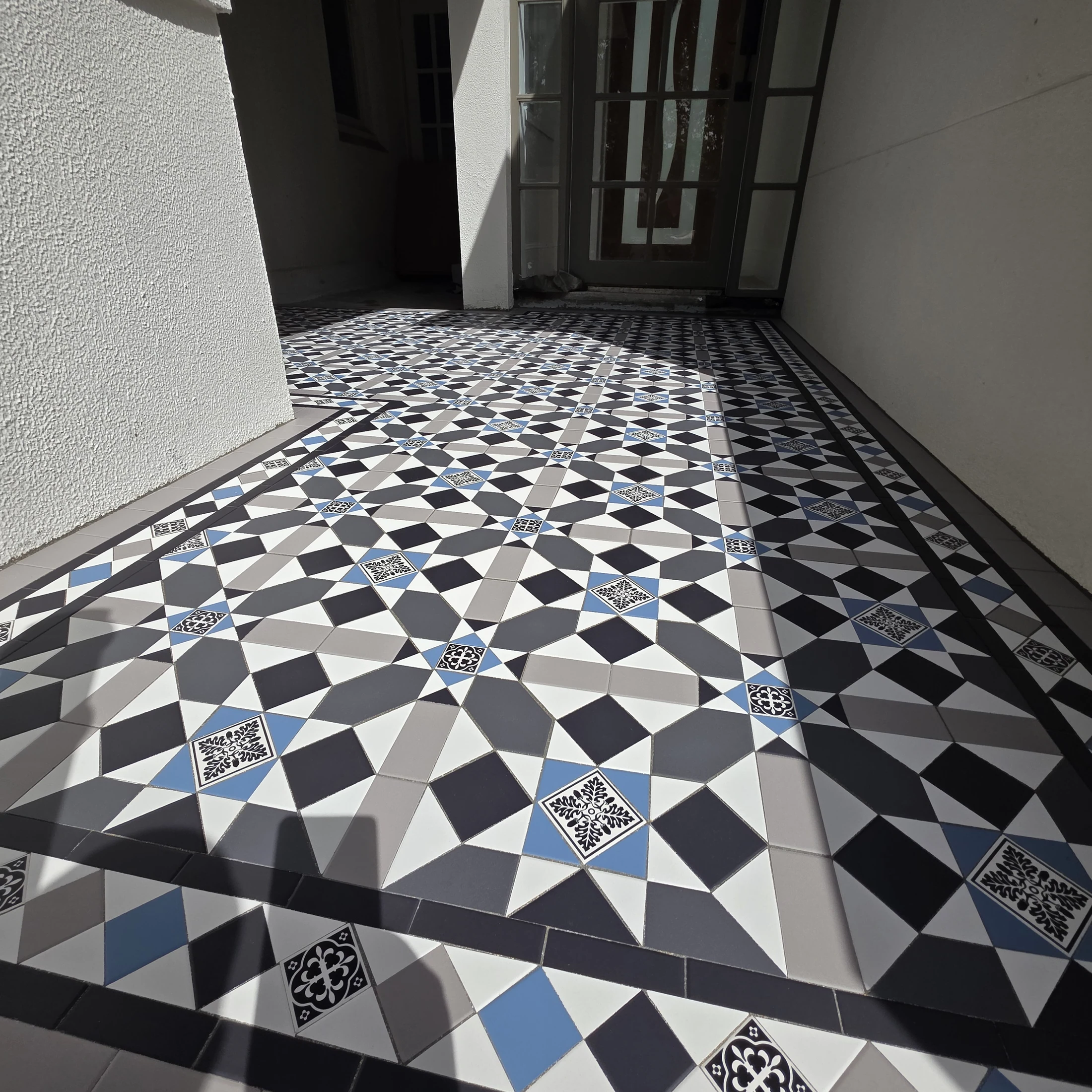
Tiling choices for Baulkham Hills homes
Baulkham Hills sits within The Hills Shire, where the documented local story includes early roads, orchard development, country retreats and later urban growth. That layered setting means a new tiled area should be read against the individual property rather than assigned a period from its suburb name alone.
On an older home, the useful clues may be the proportions of the front verandah, the relationship between the entry and garden, surviving thresholds, brickwork, joinery or a path that has been altered over time. A restrained tessellated layout can respect those cues; a new installation can also be clearly contemporary when that is the more honest design decision.
Designing verandahs, entries and pathways
For a verandah or porch, start with the geometry of the space, the door swing, step locations and the visual weight of posts and rails. A border, field and threshold transition should be set out together so the pattern does not stop awkwardly at a step or disappear beneath a later alteration.
For paths and garden edges, consider the route from the footpath to the door, changes in level, exposure to weather and how the tile meets masonry, paving or a stone bullnose. The right layout may be a small framed entry, a full-width verandah treatment or a simpler path that keeps attention on the house.
Restoration or a new tessellated surface
Where original or earlier tiles remain, keep the assessment focused on what is actually present: loose or cracked tiles, missing sections, failed edges, uneven transitions and any later patching. Matching colour, scale and pattern is a design and supply question as well as a repair question, so the surviving field should be recorded before removal or replacement is considered.
For new work, design consultation can establish the intended pattern and the practical sequence with installation. Existing substrate, drainage, access and adjoining finishes need to be assessed on site rather than treated as a universal recipe.
Checking heritage and planning context
The Hills Shire identifies heritage items and conservation areas through its Local Environmental Plan. A Baulkham Hills address should therefore be checked on its own merits before work is specified. Council's property mapping tools can help establish relevant planning information, while the property's fabric and history may need closer investigation where an older building or surviving surface is involved.
Heritage-sensitive tile work is not the same as claiming heritage approval. If a property is identified as a heritage item or is within a conservation area, obtain the applicable planning advice before changing significant fabric. A careful design can then distinguish repair, matching replacement and new work.
Protecting Our Heritage — The Hills Shire CouncilResearching Your Home's Heritage — The Hills Shire Council
Your Heritage Tiling Questions
Can you help with tessellated tile restoration in Baulkham Hills?
Yes. Restoration can begin with an assessment of the surviving tiles, pattern, edges, thresholds and areas of loss. The appropriate response may be selective repair, careful matching or a new adjoining section, depending on the condition and the design objective.
How should I approach tiles on an older Baulkham Hills verandah?
Begin by recording the verandah's proportions, steps, posts, thresholds and any surviving tile pattern. A layout should respond to those features, with a border and field sized to finish cleanly at edges rather than forcing a standard pattern into the space.
Is every older home in Baulkham Hills heritage listed?
No. Heritage status is property-specific. The Hills Shire's planning controls identify particular heritage items and conservation areas, so check the individual property and seek relevant planning advice instead of assuming that age or architectural appearance alone determines listing.
Can new tessellated tiles work with a contemporary renovation?
They can. The pattern, border, scale and colour can be designed as a deliberate new layer, while thresholds and adjoining materials keep the result coherent with the renovation. The key is to be clear about what is retained, what is matched and what is new.
What should I check before changing a tiled path or entry?
Check the existing surface, drainage, levels, access and the way the path meets steps, walls and garden edges. Also check the property's planning and heritage context through The Hills Shire's property information before finalising work that may affect significant fabric.
Discuss Your Heritage Tiling Project
Share your location, project details and photographs using our enquiry form, or call 0433 932 711.