
Tessellated tiles in Darling Point
Darling Point combines apartment buildings, early twentieth-century houses, surviving Victorian mansions and established harbour-side streetscapes. If you are planning tessellated tiles for a verandah, pathway, entry or interior, the right approach depends on the property's existing fabric, the intended pattern and the local planning context. AHTC can discuss design, tessellated tile supply, installation, restoration and stone bullnose or edging coordination for a Darling Point project.
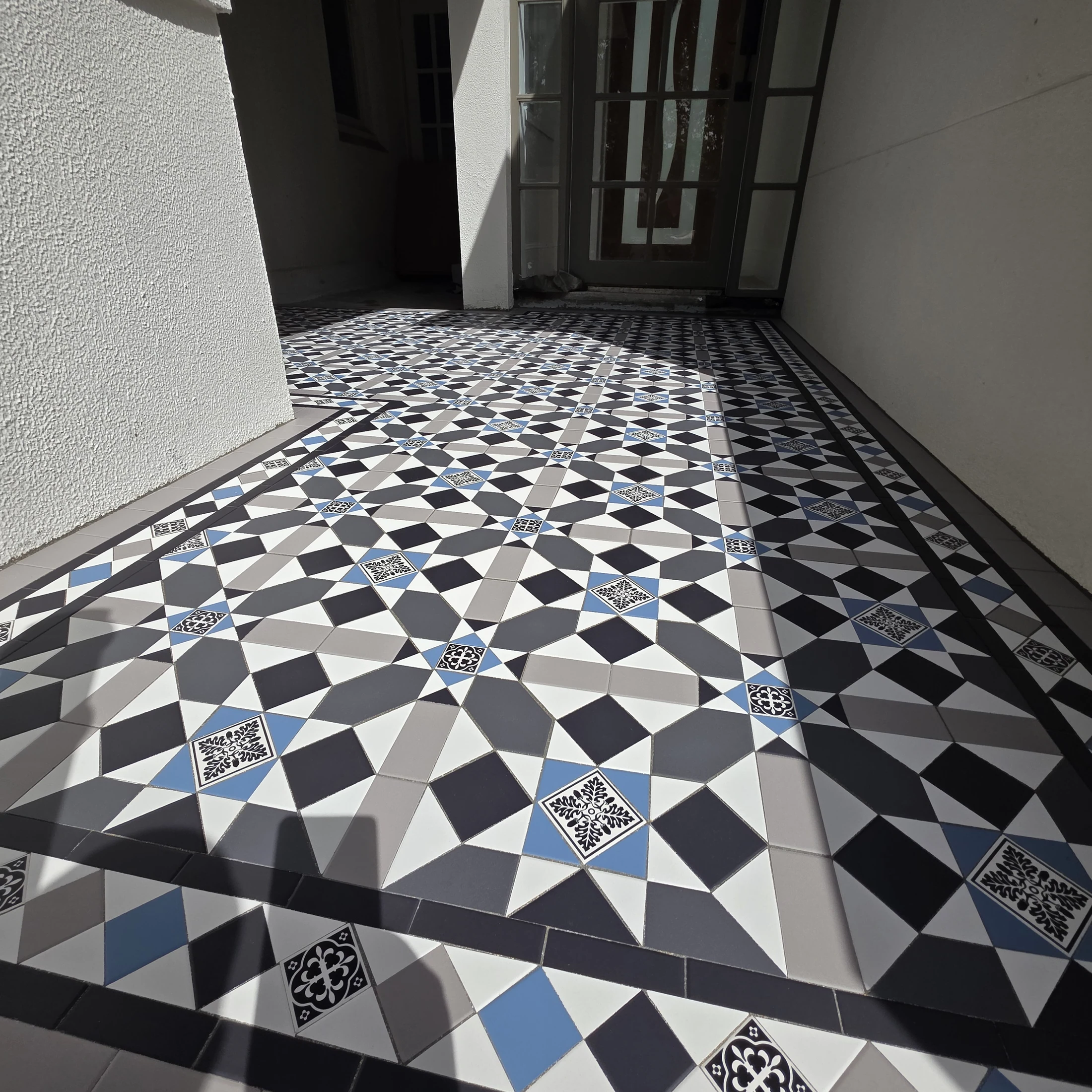
A mixed Darling Point setting calls for a property-led approach
Woollahra's local history describes Darling Point Road as a spine through a varied streetscape: high-rise apartments sit alongside early twentieth-century houses, remaining Victorian mansions and St Mark's Church. That mix means a tile layout should respond to the individual building rather than assume that every Darling Point property has the same period character.
For an older house, the proportions of the entry, verandah or path, existing thresholds and surviving finishes can guide a restrained pattern and border. For an apartment or later alteration, the design brief may instead need to address transitions, access and a new finish that sits comfortably beside the existing building. These are design considerations, not a claim that any particular property is heritage listed.
Local history fast facts - D | Woollahra Municipal CouncilEnvironmental heritage
Check the mapped context before changing significant fabric
Woollahra Council identifies four neighbourhood heritage conservation areas in Darling Point: Etham Avenue, Darling Point Road, Mona Road, and Loftus and Mona Road. The Woollahra Development Control Plan explains that conservation significance can include subdivision pattern, materials, architectural form, details and streetscape elements.
Before removing or covering existing tiles, confirm whether the property is within a mapped conservation area or contains a listed item. Council directs owners to the Woollahra LEP heritage maps and the section 10.7 planning certificate for property-level information. A current heritage or planning check should precede decisions about removal, replacement or exterior alterations.
Environmental heritageChapter B2: Neighbourhood HCAs | Woollahra Development Control Plan 2015
Use pattern, proportion and edges to connect new work to the property
A useful Darling Point tile brief starts with the space itself: record the path or verandah proportions, locate door thresholds and steps, and note any surviving border, geometric field or adjacent stonework. The pattern should be developed around those fixed conditions rather than selected as an isolated graphic.
Where existing fabric remains, careful assessment can help separate repairable areas from sections that need replacement. Matching decisions may involve colour, scale, border geometry and the relationship between tiles and stone bullnose or edging. The Woollahra DCP's emphasis on significant materials, details and finishes makes that assessment particularly relevant in the mapped neighbourhood conservation areas, while the final scope remains specific to the property.
Chapter B2: Neighbourhood HCAs | Woollahra Development Control Plan 2015
Plan the work around the existing building and access conditions
For a new installation, discuss the intended use, pattern, edge treatment and transitions before confirming the tile layout. For restoration, document the existing surface and any areas of loss before deciding how much fabric can be retained. A design consultation can then connect the selected tessellated tiles with installation sequencing and any required stone bullnose or edging coordination.
Neither route replaces a property-specific planning or heritage check.
Environmental heritageChapter B2: Neighbourhood HCAs | Woollahra Development Control Plan 2015
Your Heritage Tiling Questions
Is every Darling Point property in a heritage conservation area?
No. Woollahra Council identifies four neighbourhood heritage conservation areas in Darling Point, but their mapped boundaries do not make every property in the suburb part of an HCA. Check the Woollahra LEP heritage maps and the property's section 10.7 planning certificate.
What should I check before replacing old tessellated tiles in Darling Point?
First document the existing tiles, borders, steps and adjacent finishes. Then check whether the property is a heritage item or within a mapped conservation area. Woollahra Council advises using its LEP heritage maps and the section 10.7 planning certificate; current official records should be checked before work is scoped.
Can a new tile design suit a later apartment or altered house?
Yes, the design can be developed around the building that exists. Darling Point's documented streetscape includes apartments, early twentieth-century houses and surviving Victorian buildings, so pattern scale, thresholds, edges and transitions should be considered for the individual property rather than assumed from the suburb name alone.
Does a heritage listing mean no changes are possible?
Not necessarily. Woollahra's neighbourhood-HCA guidance says sensitive change can occur, while significant fabric and character are to be retained and conserved where the controls apply. The applicable requirements depend on the property's listing, mapped area and proposed work, so obtain current council or planning advice before proceeding.
Discuss Your Heritage Tiling Project
Share your location, project details and photographs using our enquiry form, or call 0433 932 711.