
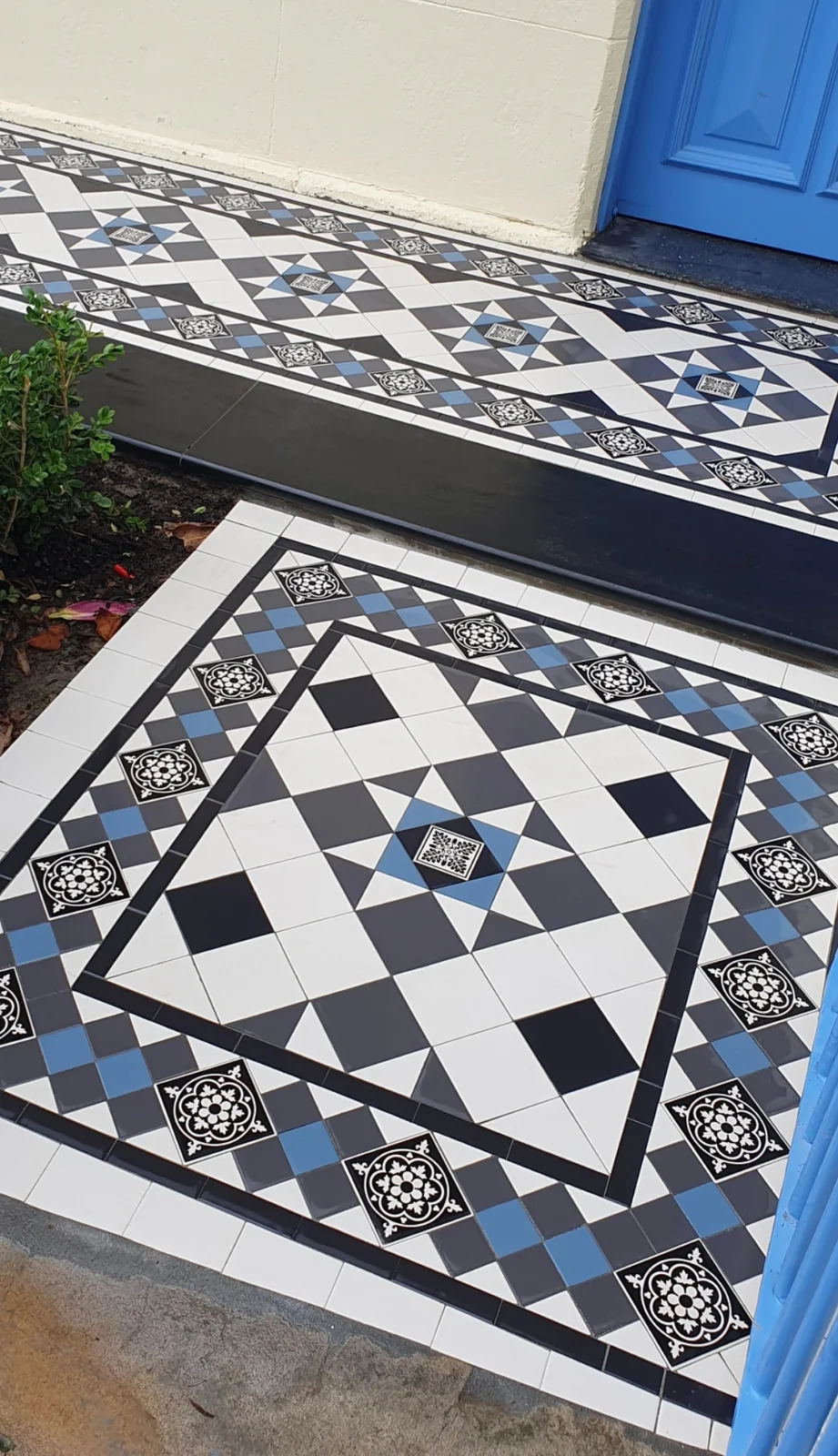
Woollahra, NSW
Woollahra NSW tessellated tiling
Supply and installation tessellated tiles for the verandah and entrance in Woollahra, NSW.
Read the projectUse this Woollahra area directory to find locality-specific heritage tiling guidance. Woollahra's eastern Sydney streets combine terrace houses, Federation homes, inter-war buildings, residential flats and harbour-side settings. Across the municipality, paths, verandahs, front fences and original finishes can form part of a property's architectural story. We provide design consultation, tessellated tile supply, installation and restoration guidance for projects across Woollahra, with the approach shaped by the building, the surviving fabric and the specific site.
Woollahra is not a single streetscape. Council describes a distinctly urban municipality that rises from harbour foreshore areas to ridgelines along Old South Head Road and Oxford Street. Its housing includes terraces, semi-detached houses, town houses and residential flat buildings, alongside shopping centres, schools and open space.
That variety matters when planning a tiled entry, verandah or pathway. A terrace frontage with a small garden and cast-iron fence calls for a different response from a Federation house, an inter-war flat building or a harbour-side property with exposed edges and changing levels. Design should begin with the proportions, access, drainage and visible relationship of the proposed work to the existing building.
About building and development in WoollahraChapter C1: Paddington Heritage Conservation Area — Woollahra Development Control Plan 2015Chapter C2 — Woollahra Heritage Conservation Area
Woollahra Council identifies 15 heritage conservation areas and more than 700 heritage items. A property may also sit within a heritage conservation area without being an individually listed heritage item, so a broad suburb label is not enough to determine the applicable rules.
Before removing, covering or altering older tiles, check the Woollahra LEP 2014 heritage maps or the NSW Planning Portal Spatial Viewer for the individual property. Council explains that some development affecting heritage items or conservation areas requires consideration of heritage significance and a heritage management document, while other minor or exempt work may follow different pathways. A tile assessment can support the design discussion, but it is not heritage approval or planning advice.
Environmental heritageHeritage and developmentWoollahra Local Environmental Plan 2014 | NSW Planning Portal
The Paddington Heritage Conservation Area DCP describes terrace frontages with small gardens, paths, verandahs and cast-iron fencing, and identifies tessellated tiles within the restricted material palette of many street frontages. These relationships can guide proportion, border treatment and the transition between public-facing paths and the house entry without copying a pattern blindly.
The Woollahra HCA DCP records Victorian, Federation and inter-war material traditions and cautions against damaging original finishes. Where surviving glazed or tessellated tiling contributes to a contributory building, the careful option may be to retain and repair it, with new work clearly considered against the existing building type, colour, texture and scale.
Chapter C1: Paddington Heritage Conservation Area — Woollahra Development Control Plan 2015Chapter C2 — Woollahra Heritage Conservation Area
A useful first conversation records what is already there: tile dimensions and pattern, areas of loss, cracking or movement, thresholds, steps, drainage points, exposure and the relationship to fences, verandahs and garden edges. From that review, the project can move toward a sympathetic repair, a new tessellated layout, or coordinated supply and installation where the original fabric cannot be retained.
For Woollahra properties, access and sequencing can be as important as the pattern. Narrow terrace entries, shared paths, sloping sites and apartment or strata settings may require careful coordination with adjoining work areas. Stone bullnose or edging coordination can be considered where steps, garden beds or a change in level need a durable and visually appropriate finish.
Chapter C1: Paddington Heritage Conservation Area — Woollahra Development Control Plan 2015Chapter C2 — Woollahra Heritage Conservation AreaAbout building and development in Woollahra
Woollahra, NSW
Supply and installation tessellated tiles for the verandah and entrance in Woollahra, NSW.
Read the project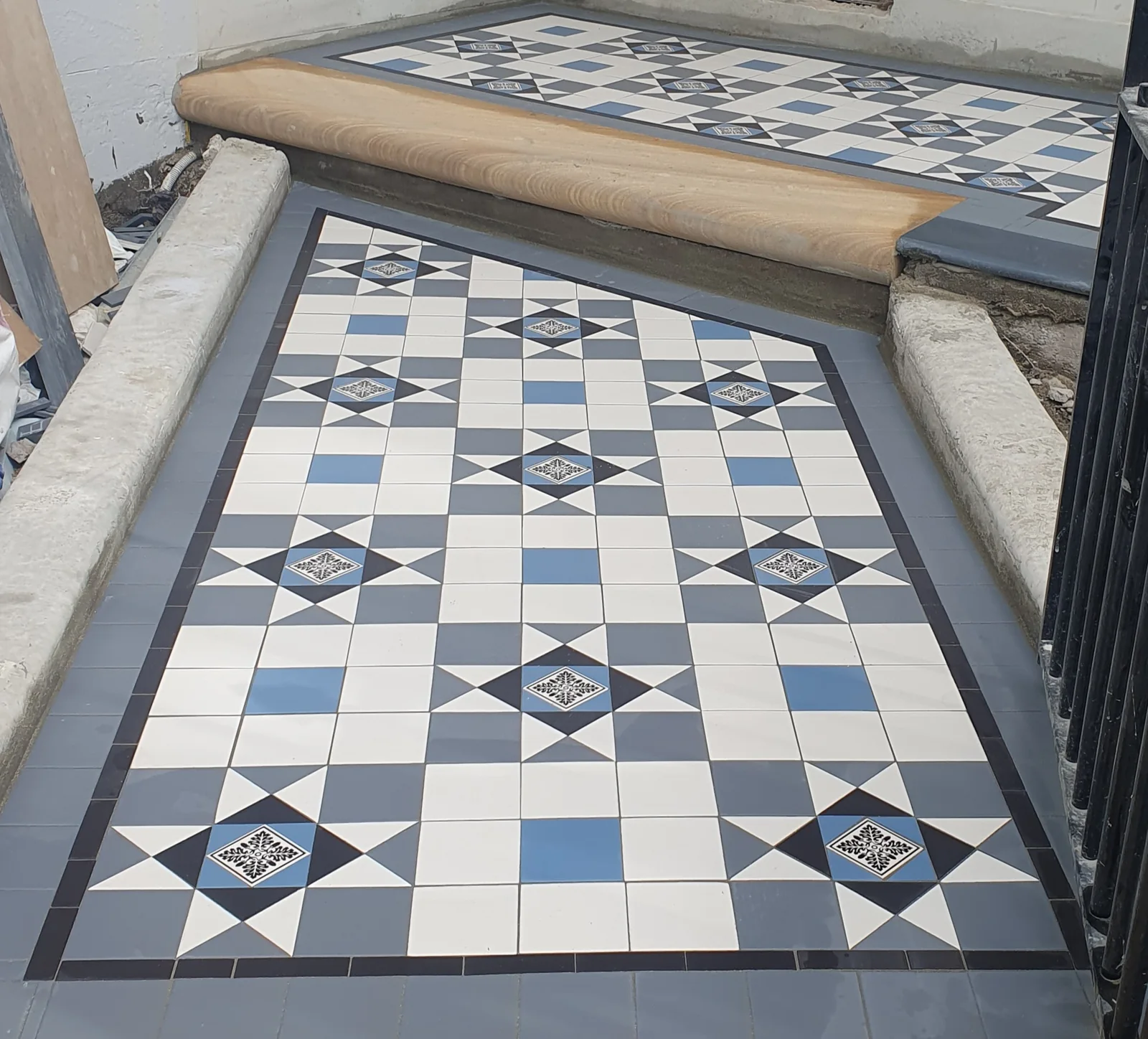
Paddington, NSW
Supply and installation tessellated tiles for the entrance pathway in Paddington, NSW.
Read the projectNo. Woollahra Council distinguishes individual heritage items from heritage conservation areas and other planning controls. Check the specific property in the Woollahra LEP 2014 heritage maps or the NSW Planning Portal Spatial Viewer before assuming that a listing, conservation area or approval requirement applies.
Document the existing pattern, tile sizes, borders, condition and relationship to the building before lifting or covering anything. Then check the property's heritage status and applicable planning controls. Where original glazed or tessellated tiling contributes to a Woollahra heritage place, the council DCP says original materials should not be damaged or inappropriately refinished.
It may be possible, but the design should respond to the existing frontage, building period, path proportions, verandah and fencing rather than treating every terrace as interchangeable. Paddington's DCP specifically describes paths and verandahs where decorative tiling can contribute to the street-front character. Property-specific planning and heritage checks still come first.
Not automatically. Council states that the need for consent depends on the Woollahra LEP heritage provisions and the applicable exempt and complying development rules. The answer can change with the property's heritage status, the location of the work and the nature of the alteration, so confirm the position for the individual site.
Share your location, project details and photographs using our enquiry form, or call 0433 932 711.