
Tessellated Tiles in Point Piper
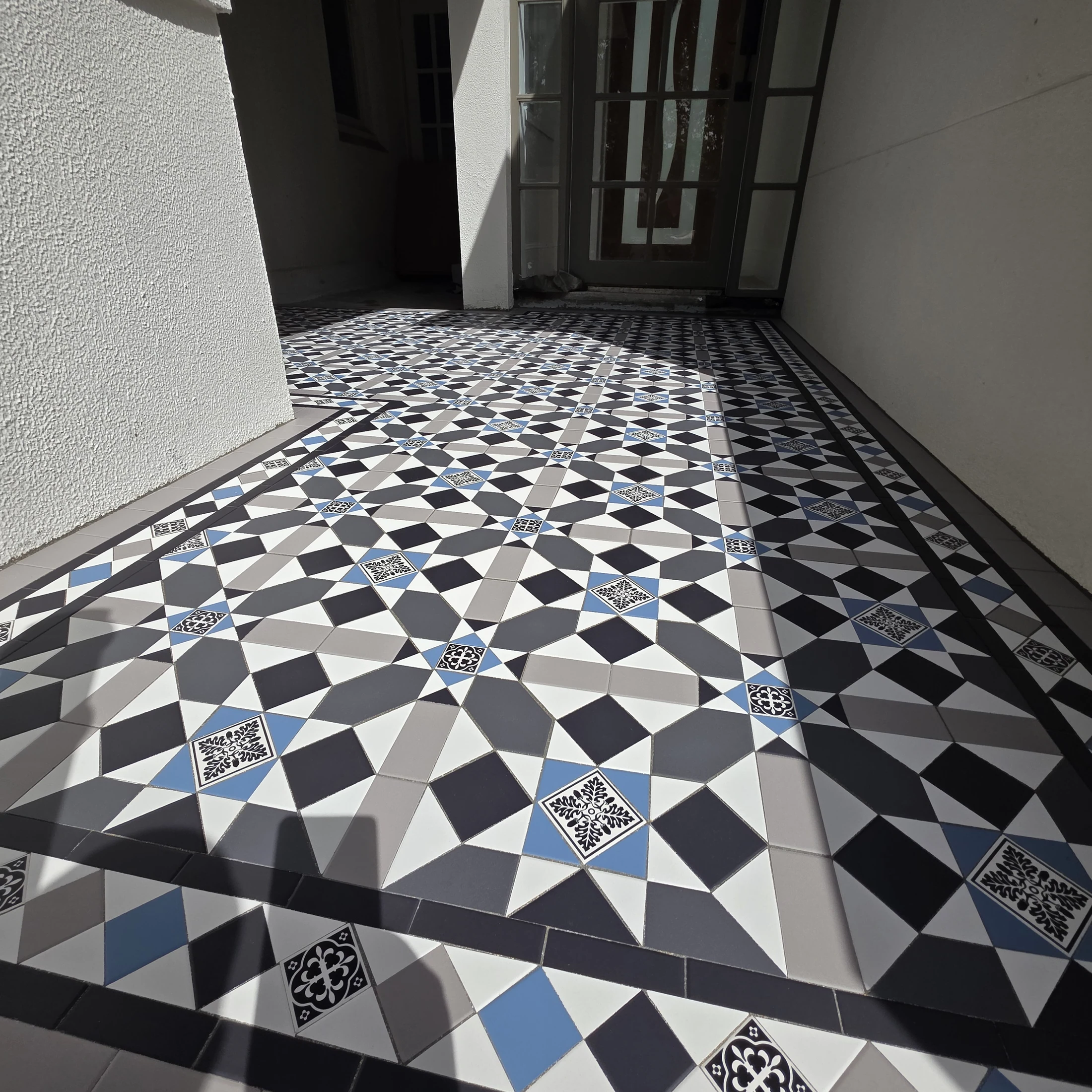
Point Piper's harbour setting includes places with documented heritage significance, from the Arts and Crafts Kilmory estate to the remnant garden of Dunara. For a Point Piper tiling project, the right starting point is the property itself: understand the existing floor, threshold, verandah or pathway, then choose a pattern and finish that sits comfortably with the architecture and setting. A design consultation can help clarify whether the brief is new tessellated tile work, careful restoration, or a combination of supply and installation.
A Point Piper context shaped by harbour views and significant places
Woollahra Council's local history records Point Piper's early association with Captain John Piper and Henrietta Villa, a classically designed villa established on the harbour peninsula in the early colonial period. The suburb's later architectural record includes Kilmory, an Arts and Crafts house whose prominent grounds, sandstone walling, terraces and gardens contribute to its significance.
This is context rather than a claim that every Point Piper property is heritage-listed. Woollahra Council identifies heritage items and conservation areas through the Woollahra Local Environmental Plan 2014 and advises owners to check property-specific planning information.
Captain John PiperWoollahra Development Control Plan 2015: G2 Kilmory, Point PiperEnvironmental heritage
Design inspiration for verandahs, entries and pathways
Point Piper projects can draw on the discipline of a strong border, measured geometry and a clear relationship between the tiled surface and its surrounding masonry or garden. At a prominent harbour property, layout, sightlines, transitions and the way a pathway meets steps or a verandah deserve as much attention as the repeating pattern.
Where existing fabric survives, matching should begin with what is actually present: dimensions, colour variation, edge conditions, previous repairs and the substrate. Where the work is new, a contemporary interpretation can still be calm and compatible without pretending to recreate a historic surface. NSW heritage design guidance recommends retaining significance, considering views and context, and making new work distinct from original fabric.
Woollahra Development Control Plan 2015: G2 Kilmory, Point PiperDesign Guide for Heritage | NSW Government
Check the property before work begins
A Point Piper address may have controls that cannot be inferred from the suburb name alone. Woollahra Council's guidance directs owners to the applicable LEP maps and NSW Planning Portal property information, and explains that consent requirements depend on the type of work and the property's heritage status.
For a listed item, a conservation area or a place affected by other planning controls, retain the relevant records and obtain the advice required for the proposal before removing original tiles, changing levels or altering significant edges. A tiling consultation can support design and scope decisions, but it is not statutory heritage approval.
Craftsmanship begins with condition and detail
Restoration work should be based on an inspection of the existing surface rather than a universal recipe. Useful questions include which tiles are original, whether movement or moisture has affected the setting, how thresholds and stairs are performing, and whether replacement pieces need to be selected for an exact or intentionally legible match.
For new installation, the same property-led approach helps coordinate pattern, edging, transitions and the practical sequencing of work. Tessellated tile supply, installation, restoration and stone bullnose or edging coordination can be considered together once the site and design brief are understood.
Design Guide for Heritage | NSW GovernmentWoollahra Development Control Plan 2015: G2 Kilmory, Point Piper
Your Heritage Tiling Questions
Is every Point Piper home heritage-listed?
No. Woollahra Council distinguishes individual heritage items, conservation areas and archaeological items through the Woollahra Local Environmental Plan 2014. The status of a particular property should be checked through the applicable planning maps and property records rather than inferred from its suburb.
What should I check before replacing tiles in Point Piper?
First establish whether the property is affected by a heritage item listing, conservation area or other planning control. Then document the existing tiles, edges, thresholds and substrate before deciding whether the work is restoration, repair or new installation. Woollahra Council explains that consent requirements depend on the property and the proposed work.
Can new tessellated tiles suit a heritage-sensitive Point Piper project?
They can be designed as new work with a clear relationship to the building and setting. NSW's Design Guide for Heritage recommends that new work support significance, consider context and views, and read as distinct from heritage fabric rather than imitating original work without explanation.
What local examples inform Point Piper's heritage context?
Woollahra Council's Point Piper records include Kilmory, an Arts and Crafts house with significant landscape and sandstone elements, and Dunara Reserve, gazetted as a local heritage item as the remnant of a residential garden. These are contextual examples, not claims about any individual client's property.
Discuss Your Heritage Tiling Project
Share your location, project details and photographs using our enquiry form, or call 0433 932 711.